
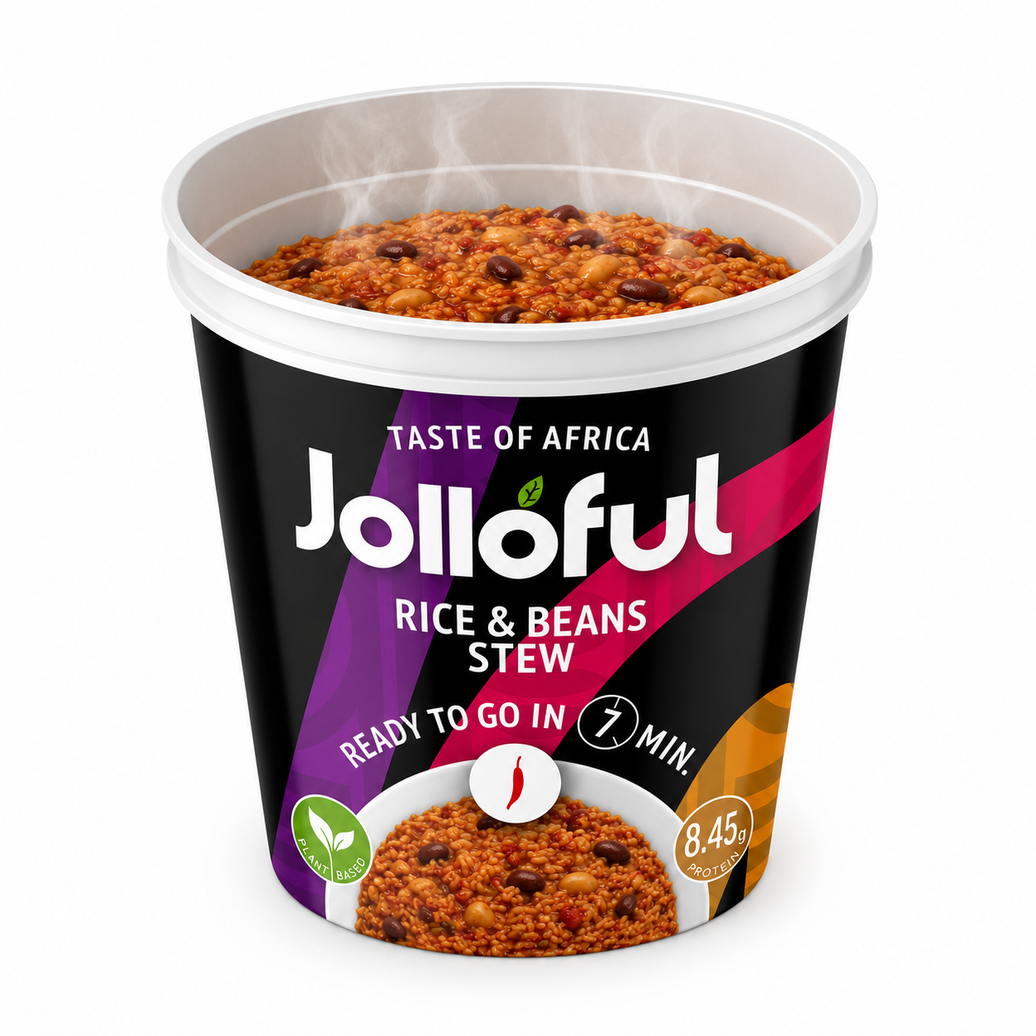
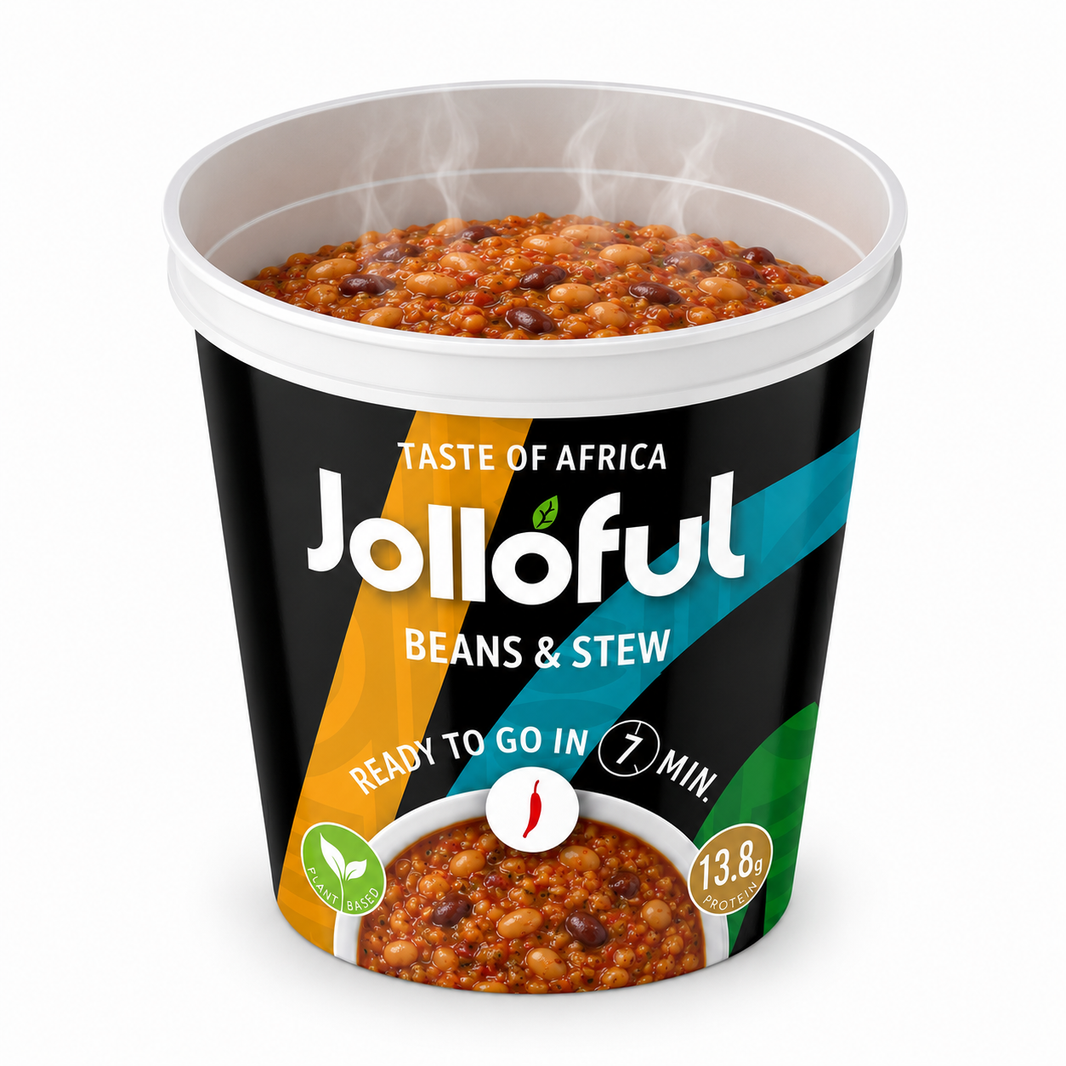
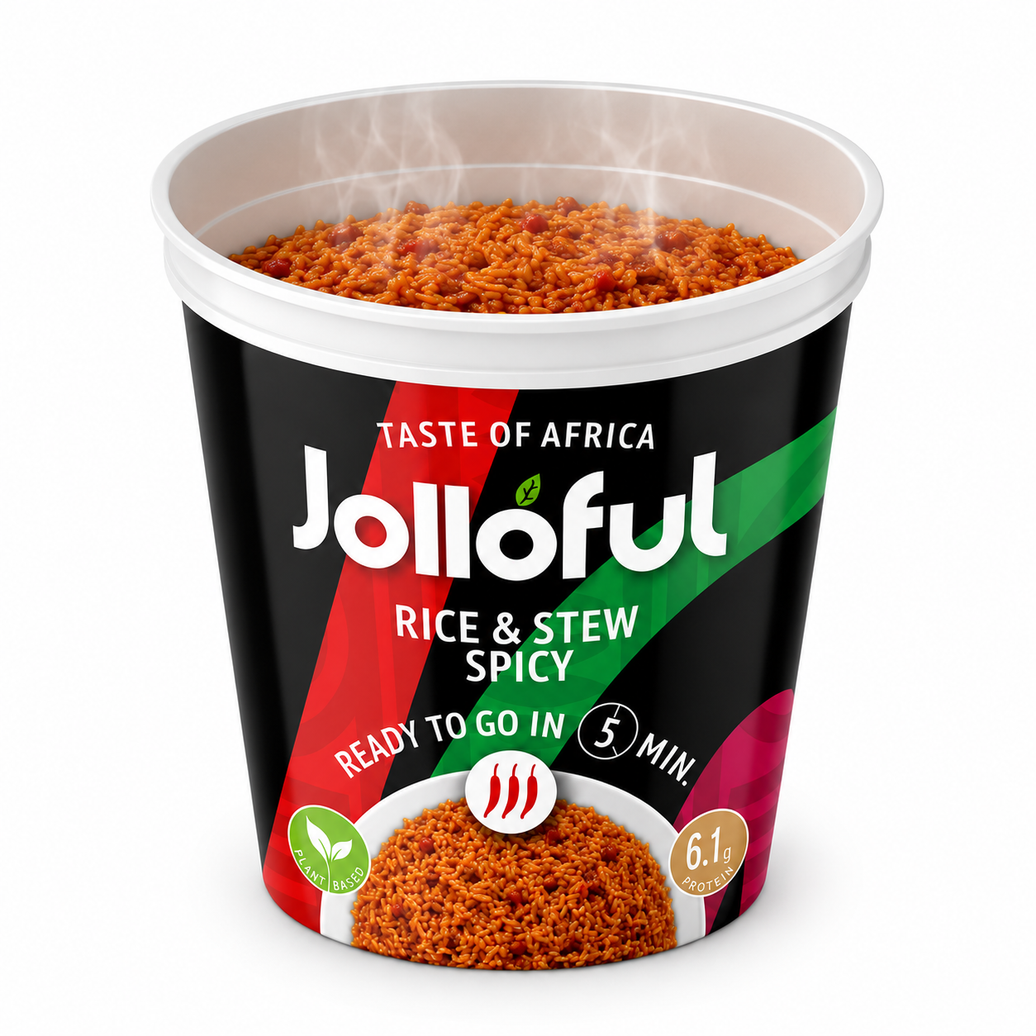
Order your 8-pack / 12 pack box today
A proper meal does not need a saucepan, a long ingredient list or a compromise on flavour. When you prepare African meal cups the right way, hot water and a few minutes are enough to bring rich, warming West African-inspired food to your desk, kitchen or travel bag.
That is the point: fast food can still have standards. It can carry real ingredients, layered spice and the kind of satisfying heat that makes lunch feel like lunch. Not bland filler. Not your instant noodles.
Why African meal cups deserve more than a rushed stir
Meal cups are built for real life: the morning when you miss breakfast, the late meeting that overruns, the train journey, the student kitchen with one kettle, or the evening when cooking from scratch is simply not happening. The best ones do not ask you to choose between speed and character.
African cooking is known for flavour that develops in layers. Aromatic vegetables, warming spices, pulses, grains and chilli all have a role to play. A well-made shelf-stable meal cup respects that balance. It gives you a convenient format without flattening the food into something anonymous.
For diaspora households, that can mean a welcome taste of familiarity on an ordinary Tuesday. For anyone new to African food, it is a straightforward first step: no specialist shopping, no complicated prep, no need to know every ingredient before you begin. Just open, add water and taste what bold food can be.
How to prepare African meal cups properly
The process is simple, but small details make a noticeable difference. Always start with the instructions on your specific cup, as water levels and standing times can vary slightly between recipes.
Start with properly hot water
Boil fresh water in a kettle. Water that is genuinely hot is what wakes up the dried ingredients, softens grains and helps spices bloom into the broth or sauce. Lukewarm water can leave a meal uneven, with a firm centre and flavours that have not fully come together.
Open the lid or sachet as directed, then add the stated amount of hot water. Do not guess if there is a fill line or measurement on the pack. Too little water can make the meal dry and overly intense; too much can dilute the seasoning and leave the texture loose.
If you are using an office hot-water tap, give the cup a little longer than you would with kettle-boiled water. These taps are practical, but their temperature is not always as fierce as a fresh boil.
Stir from the bottom, not just the top
Use a fork or spoon to stir thoroughly, reaching into the corners and right down to the base of the cup. This is the step people skip when they are hungry, and it is usually why the last few bites are clumped or under-hydrated.
A good stir distributes the seasoning and makes sure every grain, vegetable and pulse gets its share of water. Once mixed, cover the cup according to the pack instructions. The trapped heat does the patient work while you get on with the rest of your day.
Let it stand for the full time
Five to seven minutes can feel long when your lunch break is short. Still, giving the meal its full standing time is part of the preparation, not a suggestion. It allows the ingredients to hydrate evenly and gives the spice blend time to settle into a fuller flavour.
Use that time to make tea, answer one message, set the table or simply take a breath. Then stir once more before eating. That final stir brings together any sauce or seasoning that has settled and helps you judge the texture.
If the meal looks a touch dry after resting, add a small splash of hot water, stir and wait another minute. Add gradually. You can always loosen it, but you cannot easily take water back out.
Get the texture you actually want
There is no single correct texture for every meal cup. Some people prefer a thicker, heartier bowl that eats like a quick supper; others want something softer and more spoonable. The water amount is your main tool, within the pack guidance.
For a fuller, more concentrated result, stay close to the lower end of the recommended water measure if the instructions allow it. For a softer finish, add a little extra hot water after the first standing time. Avoid adding cold water: it cools the meal and interrupts hydration.
Heat is personal too. African food is not one flavour, and spice levels should not be treated as a test of courage. If a recipe has a confident chilli kick, enjoy it as it is or pair it with a cooling side such as yoghurt, cucumber or a simple green salad. If you love more fire, add your preferred chilli sauce only after tasting first. The recipe deserves that first bite on its own terms.
Make a five-minute meal feel more complete
A meal cup can stand on its own, especially when time is tight. On a slower day, a few simple additions can turn it into something that feels more like a plated meal without creating washing-up mountain.
A handful of fresh spinach folded through after preparation adds colour and softness. Sliced avocado brings richness and works well beside warming spices. For extra protein, try a boiled egg, leftover roast chicken, pan-fried tofu or chickpeas. These additions are optional, not required. The cup should already do the main job: delivering a satisfying meal quickly.
Think of this as a flexible base rather than a rulebook. At work, keep it simple. At home, build it out. When travelling, enjoy it exactly as it comes. Convenience should adapt to your day, not demand more effort from you.
Where meal cups earn their place
The best pantry foods are the ones you remember to reach for. Keep a few African meal cups where hunger tends to strike before you have a plan: in the desk drawer, the kitchen cupboard, a university room or the weekend bag.
They are especially useful when your fresh-food shop has not happened yet, when you are home late, or when everyone in the household wants something different. Their shelf-stable format means you can have a flavourful option waiting without worrying about it going off before you get to it.
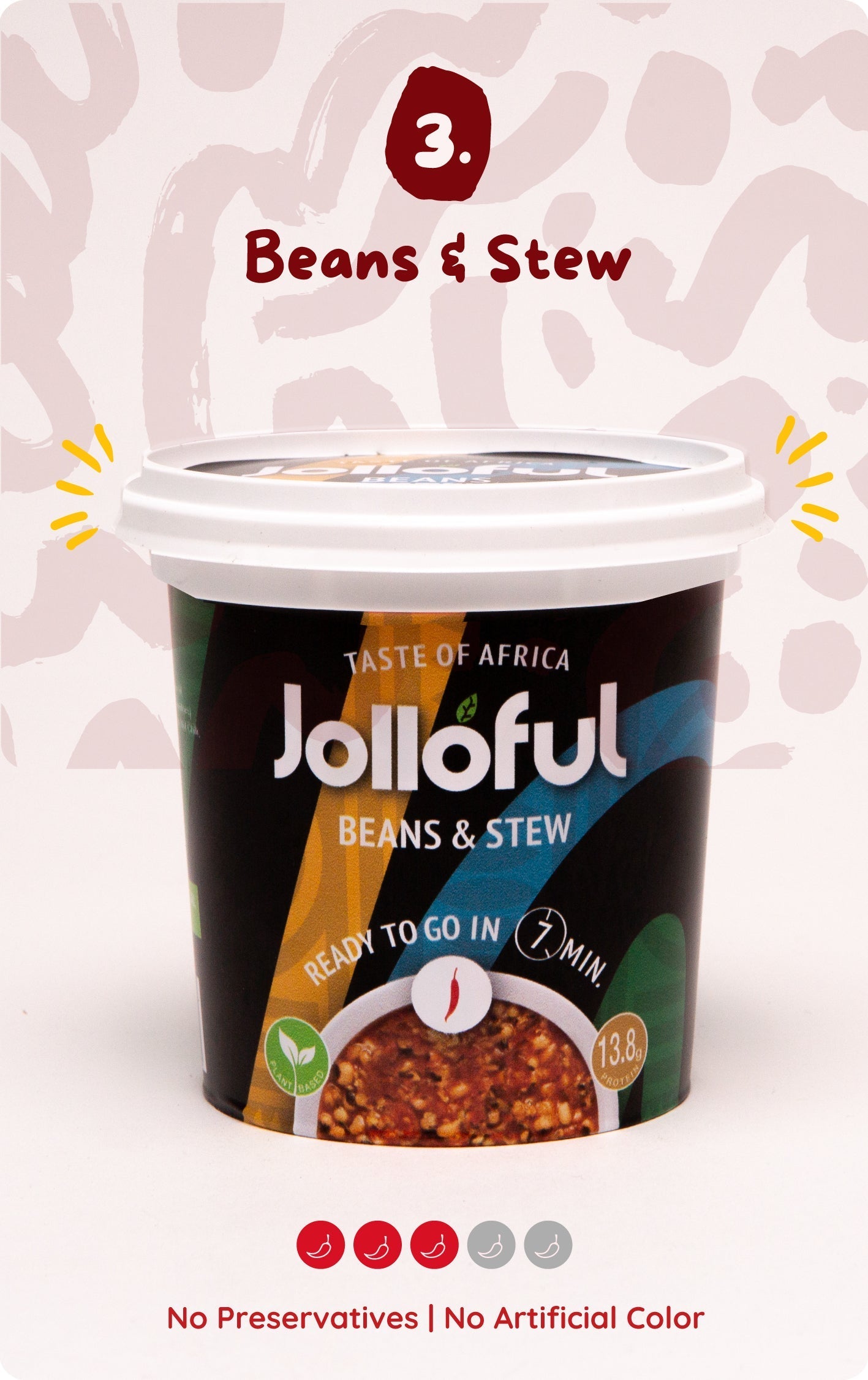
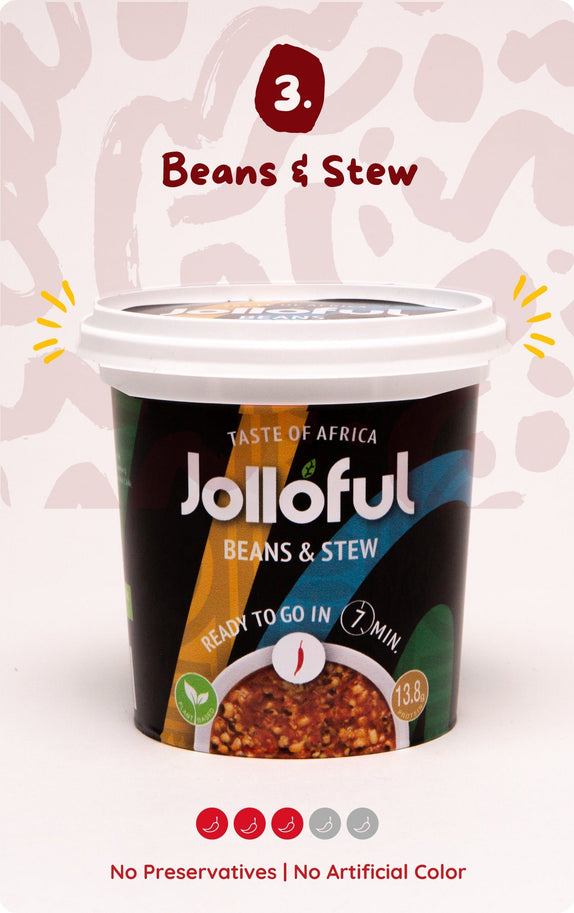
For busy households, that matters. A quick meal should not mean settling for artificial colours, added preservatives or flavours that could belong to any product in any aisle. Jolloful makes room for bold African taste in the rhythm of modern life - real food, rooted in culture, ready when you are.
Common mistakes when preparing African meal cups
Most disappointing results come from rushing rather than from the meal itself. The first mistake is under-stirring. Dry ingredients naturally settle during storage, so a quick swirl at the surface will not distribute everything properly.
The second is lifting the lid too soon and deciding it is not ready. Hydration takes those few minutes, particularly in cooler rooms or when the cup is placed on a cold worktop. Keep the heat in, then assess it after the recommended wait.
The third is treating every recipe the same. Different ingredients absorb water differently, and every cup has its own directions for a reason. Follow the pack first, then adjust gently for your preferred texture on future meals.
Finally, do not mistake convenience for a reason to eat at your screen without pause. Even a seven-minute meal can be a small reset. Sit down if you can. Taste the spice. Let a quick lunch be more than something you finish between tabs.
A better answer to the question, “What can I eat quickly?”
The next time the day gets busy, you do not need to default to a sad sandwich or a flavourless snack. Boil the kettle, prepare your meal with care and give those few minutes the respect they deserve. Good food can fit into a packed schedule - and still taste like it came from somewhere.



Leave a comment