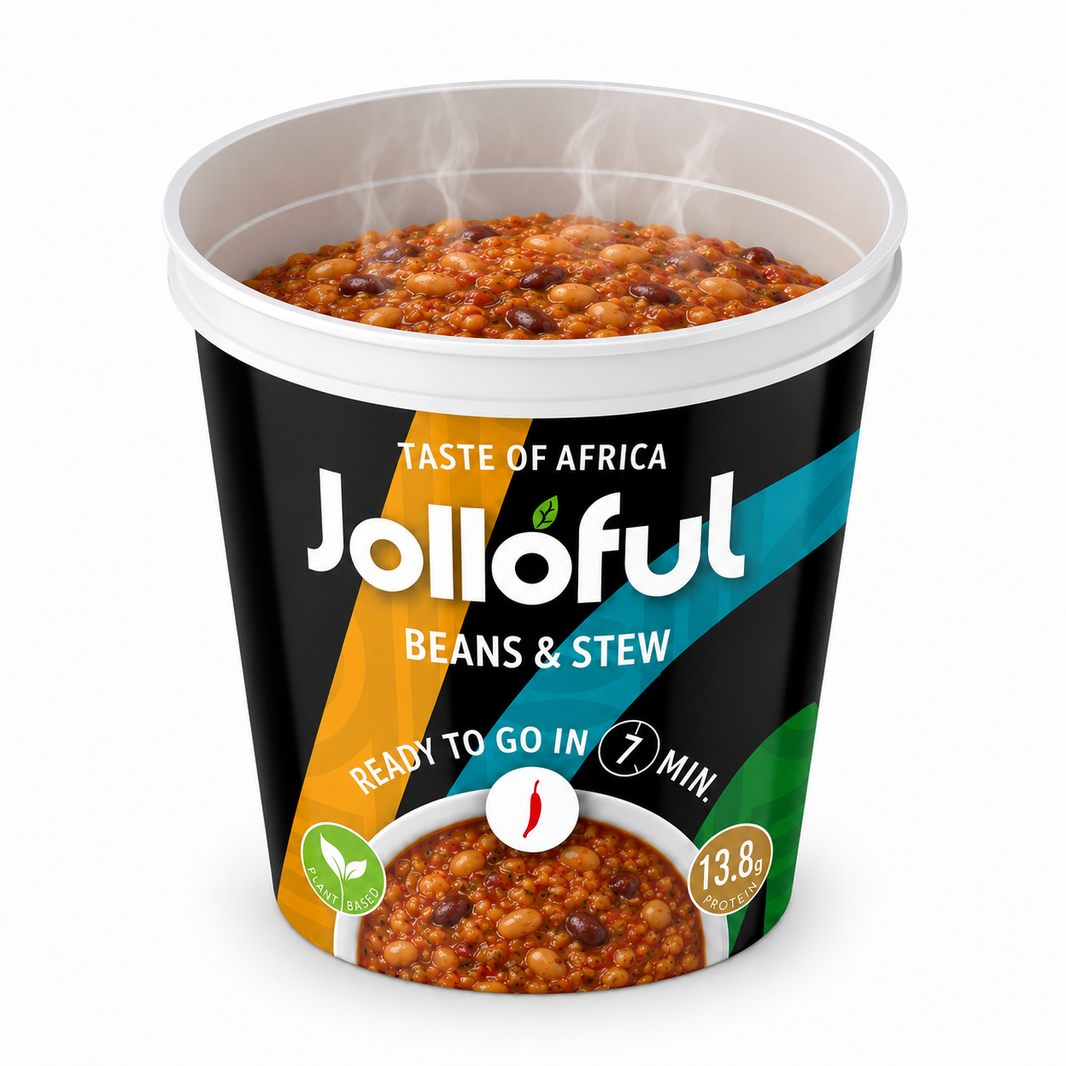

Order your 8-pack / 12 pack box today
Could a shelf-stable meal be a better fit for your household than fresh food you don’t get around to eating? The answer depends on more than one label. When comparing sustainable ready meals Germany has to offer, look at the product information, storage needs, packaging and whether the portions fit your plans.
It can be hard to compare sustainability claims, and convenience may seem at odds with fresh cooking. But a ready meal’s environmental impact cannot be summed up by a single word on its packaging.
This guide offers a practical way to weigh the details. You’ll learn what to check in ingredient and packaging information, how storage affects everyday use, and how planning portions can help avoid food being forgotten. We’ll also look at convenient Pan-African meals, including Jolloful’s shelf-stable options inspired by West African recipes. Convenience alone, however, is not proof of environmental benefit.
What Makes a Ready Meal Sustainable in Germany?
A ready meal can be convenient, enjoyable and rooted in a food tradition without those qualities proving its environmental impact. Ask three separate questions: Does it suit your schedule? Do you enjoy the flavor? What product-specific information is available about its environmental effects? Each answer tells you something different.
A sustainable ready meal is one whose environmental claims can be assessed using clear, relevant product information, rather than assumptions based on its format or appeal. This leaves room for personal priorities while encouraging specific claims that explain what they refer to.
Nutrition and cultural authenticity can shape what you choose to eat. A familiar dish may bring comfort, while a new cuisine can make an ordinary meal feel special. Convenience can help when cooking time is short. These are valid reasons to choose a meal, but they are not evidence of environmental performance. A product’s storage format alone cannot tell you its overall impact either.
Which sustainability factors matter when comparing meals?
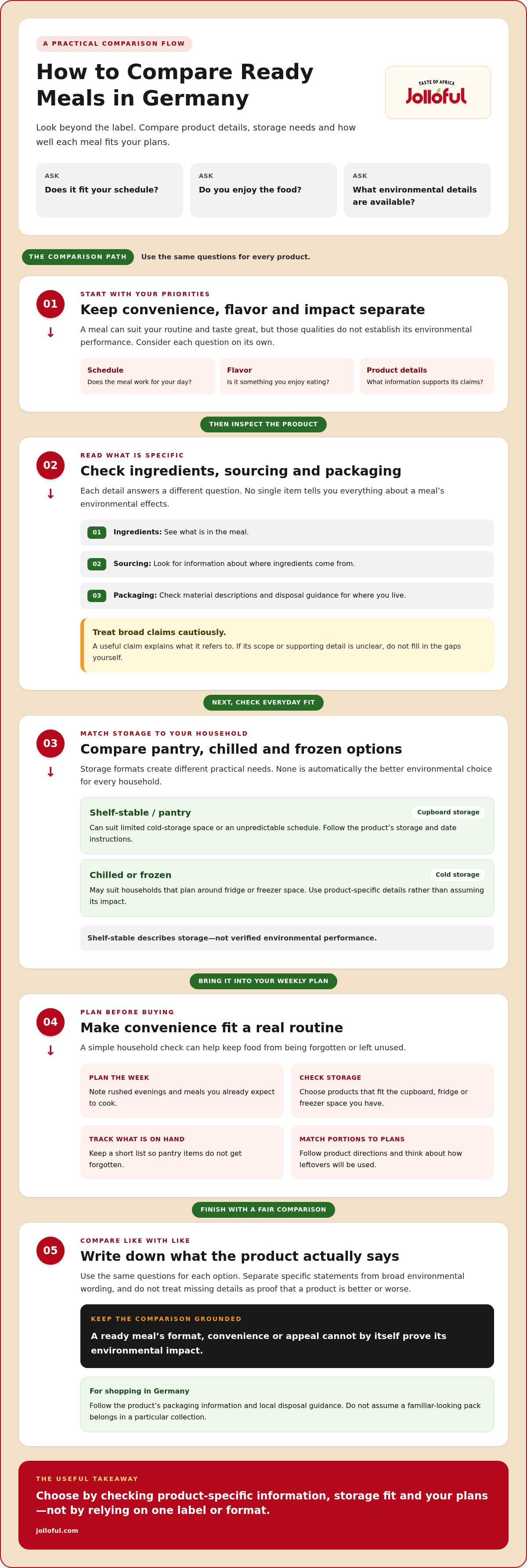
Look for product-specific details, and consider what each one tells you. An ingredient list shows what is in the meal. Sourcing information may explain where ingredients come from. Packaging descriptions can identify materials, while local disposal guidance helps you decide what to do with the pack. Storage instructions and portion details help you judge whether a product fits your household. No single detail answers every question.
Your priorities may depend on your kitchen and routine. Someone with little cupboard space may value a different format from someone who plans meals well in advance. Make a fair comparison by using the same questions for each product, rather than trying to create a universal ranking.
Why does the Germany context matter to shoppers?
In Germany, as elsewhere, shoppers encounter different kinds of convenient food and preparation models. For example, HelloFresh, a German meal-kit company, illustrates a model where customers prepare meals from supplied ingredients. A ready meal follows a different routine. Compare like with like by being clear about the kind of convenience you’re assessing.
On a product page or at the shelf, separate specific statements from broad environmental phrases. A useful claim tells you what it refers to. If it doesn’t explain its scope or provide supporting detail, treat it cautiously instead of filling in the gaps yourself.
Packaging disposal guidance can differ by location. If you shop in Germany or the UK, follow the product information and the guidance where you live. Don’t assume that a familiar-looking pack belongs in a particular collection.
How Shelf-Stable Ready Meals Fit into Everyday Eating
A meal that waits in the cupboard can make a busy week easier. But shelf-stable describes how a product is stored, not how its environmental impact has been assessed. Shelf stability is a storage feature, not verified proof of environmental performance.
For shoppers comparing sustainable ready meals Germany options, that distinction keeps the decision grounded. Pantry meals, chilled meals and frozen meals have different storage needs. None is automatically the better choice for every household. Consider how each product fits your plans, then review its ingredient, packaging and food-waste information.
What shelf-stable means for meal planning
Shelf-stable meals can be kept in a pantry when the product instructions say so. Jolloful’s shelf-stable, ready-to-eat meals offer a pantry option inspired by traditional West African recipes. A meal close at hand can be useful after a long workday, when travel plans change, or when the ingredients you expected to use are no longer available.
Storage still depends on the individual product. Follow its instructions before opening and check the date information. After opening, follow any handling or storage directions. Keep pantry products together and place those with the nearest date at the front, so you can see what to use first.
What convenience can and cannot tell you
Quick preparation saves time, but it doesn’t show how a meal performs environmentally. A short route from cupboard to plate may suit a late evening. Ingredients, packaging, storage needs and the chance of leftovers still require separate consideration.
Chilled and frozen options may suit households that plan around fridge or freezer space. A pantry meal may work better for someone with limited cold-storage room or an unpredictable schedule. These are practical differences, not a ranking of environmental impact. Use product-specific information rather than assuming one storage format uses fewer resources.
Try this simple routine before shopping:
- Plan the week: Note which evenings are likely to be rushed and which meals you already expect to cook.
- Check your storage: Choose products that fit the cupboard, fridge or freezer space you have.
- Track what’s on hand: Keep a short list so pantry items don’t get forgotten behind newer purchases.
- Match portions to plans: Follow product directions and think about how you’ll use any leftovers.
This routine won’t prove a meal is environmentally superior, but it can help you buy with intention and use food before it’s overlooked. Convenience works best when it supports a real plan, not when it becomes another item left unused.
If a pantry-ready meal would suit your routine, explore Jolloful’s ready-to-eat meal range and consider how it fits your storage and meal-planning needs.
How to Compare Sustainable Ready Meals Available in Germany
Turn product pages into a practical shopping tool. When comparing sustainable ready meals in Germany, look for statements that describe something specific and distinguish them from broad phrases with no clear meaning. A named material or ingredient gives you something concrete to assess. A general promise of being “green” may not explain what was measured or which part of the product it refers to.
Use the same questions for each option, but don’t treat missing details as proof that a product is better or worse. Write down what the label or product page actually says. This makes it easier to compare choices without guessing or relying on attractive wording alone.
Check ingredients and product information
Read the ingredient list, then look for clear sourcing information. Jolloful states that its meals use real ingredients and no artificial preservatives. These are specific product claims, but they don’t establish a meal’s overall environmental impact. Ingredient information tells you about the product’s contents; sourcing details offer a separate kind of information when provided.
For each product, note what is stated and what remains unanswered. Don’t assume an ingredient is locally sourced, or that a simple-sounding ingredient list makes a meal environmentally preferable. Base your comparison on details shown on the label or product page.
Compare packaging, storage, and likely food waste
Check whether the product description names its packaging material and gives disposal guidance. Read storage directions alongside the space you have at home. Then consider the portion and quantity you’re likely to use. These details can help you avoid buying something that doesn’t fit your kitchen or plans, without turning a convenient format into an environmental ranking.
- Ingredients: What does the ingredient list say, and is sourcing information provided?
- Packaging: Are material details and disposal guidance clear?
- Storage: Can you keep the meal as directed in the space you have?
- Portion fit: Does the amount suit the people and meals you’re planning for?
Include taste and cultural preference in your decision, too. A meal inspired by West African cooking may bring welcome variety to your week, while a familiar favorite may be the option you’re most likely to enjoy. Those preferences matter when choosing food you’ll want to eat, but they are not environmental proof.
Compare what each product specifically tells you, note what it doesn’t, and choose what fits your household. If Pan-African meals are among the options you’re considering, explore Jolloful’s ready-to-eat meal range using the same practical approach.
A Practical Ready-Meal Routine for German Households
A ready meal works best as part of your routine, not as a backup you forget about. Think about the moments that shape your week: a lunch break between meetings, a late train home, or an evening when people in the household eat at different times. Giving a meal a place in that rhythm makes it easier to enjoy rather than leave it untouched.
Plan around the meals you actually need
Use your calendar as a simple guide. Mark days when work, travel or family plans may leave little time to cook, then decide which meal would make those moments easier. You don’t need a strict menu. A flexible plan leaves room for changing schedules and helps you avoid buying food for an imagined week that never happens.
It can also help to connect ready meals with ingredients you already use. If you’ve opened fresh vegetables or prepared a side dish for another meal, plan to serve them alongside a ready meal before they’re forgotten. Let the meal work with what’s already in your kitchen instead of creating a second shopping list.
- Notice your week’s pressure points: Identify workdays or travel days when cooking may be difficult.
- Choose a meal moment: Decide whether the ready meal is for lunch, a late dinner or a shared evening meal.
- Use what’s already at home: Pair it with a suitable side or ingredients you planned to use soon.
- Adjust as plans change: Revisit your meal plan when your schedule shifts, rather than letting food sit unused.
Make convenience part of a balanced meal
Rice, beans and stew can be served on their own or alongside a fresh side, such as vegetables or a salad already in your kitchen. Treat this as a flexible serving idea, not a rule about what makes a meal nutritionally complete. A side can add freshness and texture, while the stew brings warmth and aroma to the plate.
Food routines can also make space for heritage and discovery. Jolloful’s meals draw inspiration from West African recipes, bringing those culinary roots into a weekday lunch or an unhurried dinner at home.
A steady routine doesn’t need to be complicated. Choose meals that reflect the week you’re actually having, and make room for food that feels satisfying as well as useful. Small choices can make convenience feel personal rather than like a last-minute compromise.
How Jolloful Brings Pan-African Meals into Modern Routines
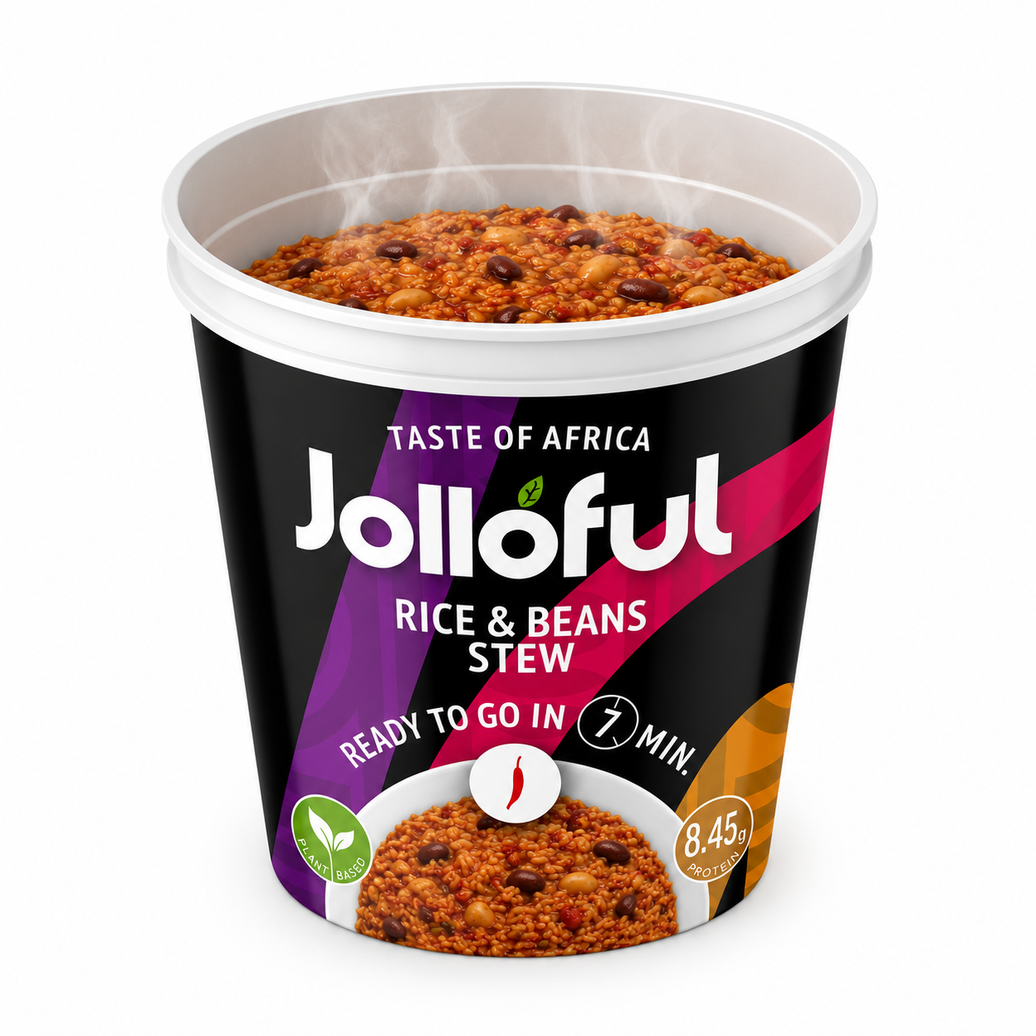
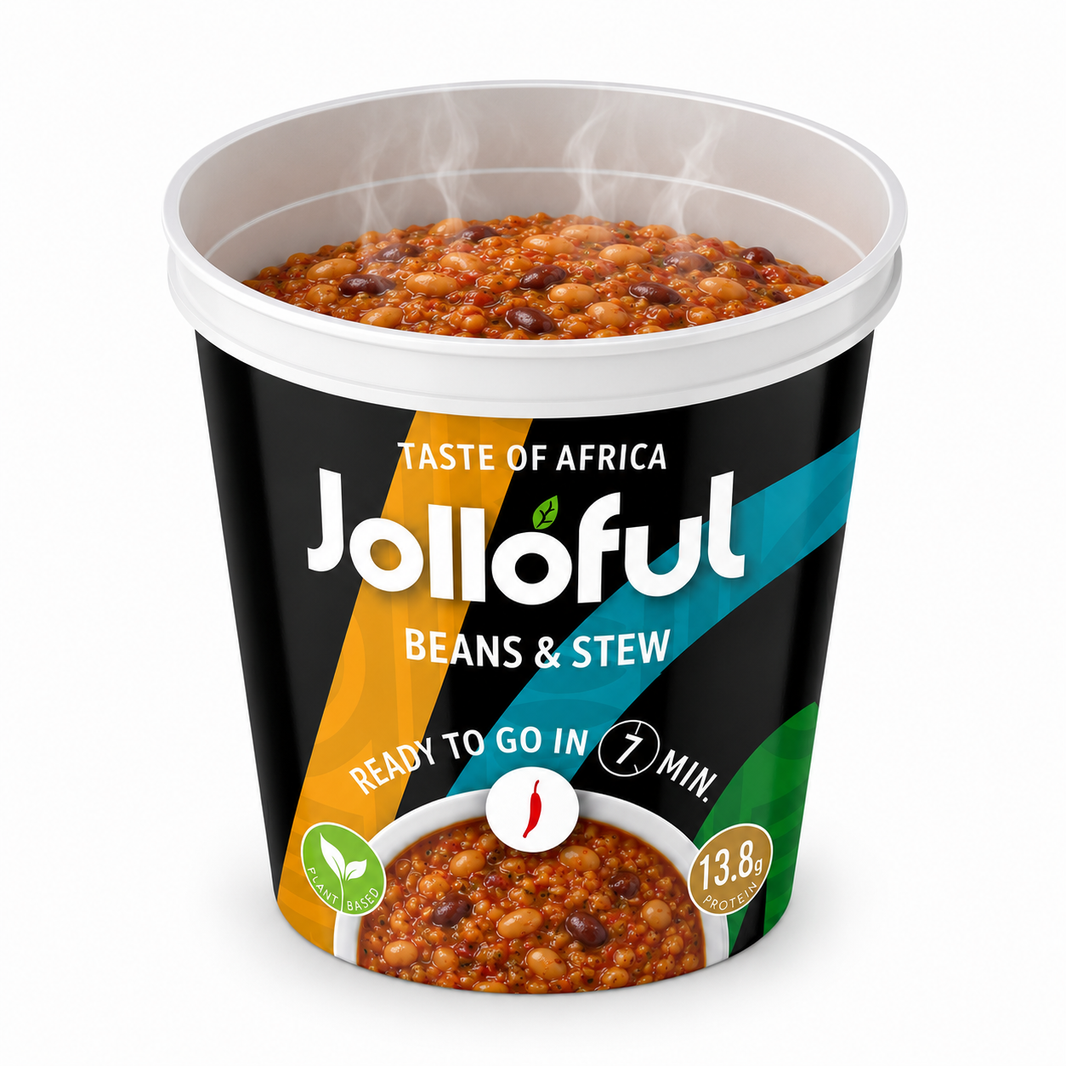
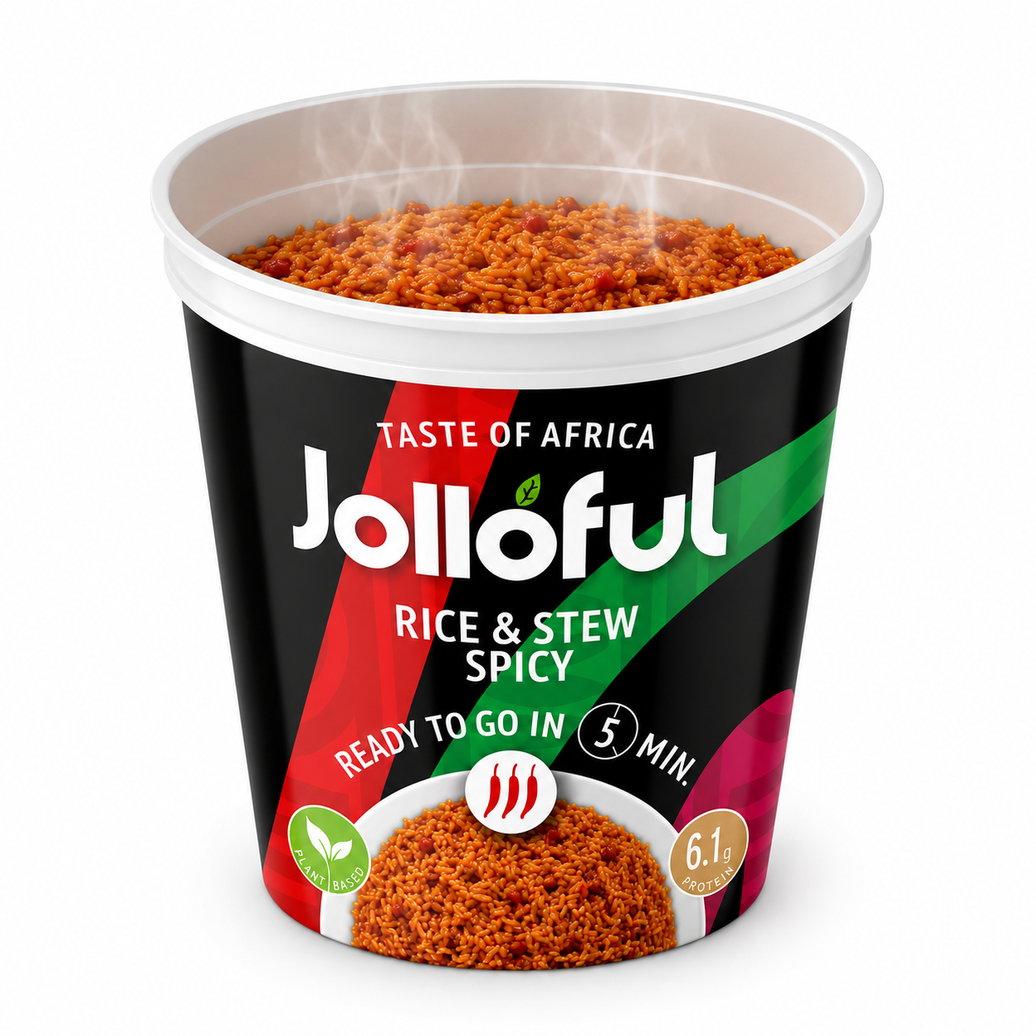
Traditional food can be part of an everyday routine, even when there isn’t time to cook from scratch. Jolloful is a Germany-based food technology company offering shelf-stable, ready-to-eat Pan-African meals inspired by traditional West African recipes. Its range includes Jolloful Rice and stew mild, Jolloful Rice and stew spicy, Jolloful Beans and stew, and Jolloful Rice, beans and stew .
That convenience is practical, not an environmental certificate. As with any ready meal, assess product information about ingredients, packaging, storage and portions separately. A meal can suit your schedule and bring cultural variety to the table without making unsupported claims about its environmental impact.
Traditional West African flavors, made for convenient meals
Rice, beans and stew are familiar foundations for many meals, each bringing its own texture and character to the plate. Jolloful draws on traditional West African recipes and presents these foods in a ready-to-eat format for modern routines. Explore the company’s story to learn more about its culinary roots and traditional West African food heritage.
Explore Jolloful's ready-to-eat meal options
The meals are shelf-stable and quick to prepare, which can be useful when a workday runs late or you want a convenient option close at hand. Follow each product’s storage and preparation instructions, and assess its ingredients and packaging on their own terms.
For shoppers comparing sustainable ready meals Germany has available, the same clear framework applies: convenience and cultural connection matter to everyday use, but neither proves environmental performance. Jolloful describes its meals as made with real ingredients and no artificial preservatives. Those statements tell you about the company’s ingredient approach, but they don’t replace product-specific sourcing or packaging evidence.
You might keep a meal for an evening when cooking time is short, or serve rice, beans and stew with a fresh side you already have at home. The idea is simple: let a convenient meal work with your plans instead of buying extra food that may go unused. Choose options that appeal to your household and fit the way you shop and store food.
If you’re curious about bringing these Pan-African meals into your routine, browse Jolloful’s ready-to-eat meal collection and compare the options with your household needs.
Make Your Next Meal Choice More Intentional
A thoughtful approach to sustainable ready meals Germany shoppers can use starts with a small habit: pause before adding a meal to your basket. Ask whether it suits a real moment in your week, fits the space you have, and offers information you can assess. That quick check can turn convenience into a considered choice without expecting one product to meet every priority.
Food should still bring pleasure and connection. A familiar bowl of rice, beans and stew can make a busy evening feel more comforting, while a new flavor can add something fresh to your routine. Choose meals that work for your household and make room for the food traditions you want to enjoy.
Small, realistic choices can shape a routine that feels both convenient and personal. Explore Jolloful’s ready-to-eat meal range to find Pan-African options for your next meal.
Frequently Asked Questions
Is shelf-stable food automatically more sustainable?
No. Shelf-stable describes storage, not environmental impact. A fuller comparison may include ingredients, packaging, transport information where available, and whether the food gets eaten. A pantry meal that fits your plans may be more useful to you than one that needs cold storage, but that preference doesn’t prove it has a lower impact. Base conclusions on product-specific evidence, not one feature alone.
Are ready meals sustainable in Germany?
There’s no blanket answer for every ready meal sold in Germany. Compare the details for the specific products you’re considering, then think about how you’ll shop, store and use them. Local context helps you follow relevant packaging disposal guidance, but it doesn’t make a product sustainable by itself. Be cautious about broad claims that don’t explain what they refer to.
Can ready meals help reduce food waste?
They may help if you choose meals you’ll actually eat and buy an amount that fits your plans. Before adding one to your basket, picture when it will be served and who will eat it. A household with changing schedules might choose a different quantity from one with a set meal plan. Check the product’s date and storage instructions, and avoid buying more than your routine can accommodate.
What should I check on a ready-meal label?
Start with the ingredient list, storage instructions and date information. Then look for specific sourcing or packaging details if the product provides them. Check the portion size against the people you’re feeding and the occasion, such as a solo lunch or shared dinner. A claim about one feature, including ingredients, can be useful, but it doesn’t describe every part of a product’s environmental impact.
Are plant-based ready meals always more sustainable?
No. A plant-based description tells you something about the ingredients, not the full environmental picture. Compare available information about the specific meal, including its packaging and storage needs, and consider whether you’ll use the portion. Choosing a plant-based meal that doesn’t suit your tastes or plans may still lead to uneaten food. Treat the ingredient category as one detail, not a complete assessment.
How can I choose a convenient ready meal without greenwashing?
Look for clear, product-specific statements and ask what each one describes. “Quick to prepare,” for example, explains convenience but says nothing by itself about environmental impact. Compare the details provided about ingredients, packaging, storage and portions, and don’t fill gaps with assumptions. This approach works for shoppers in Germany and the UK alike. Follow packaging disposal guidance for the place where you live.


Leave a comment