
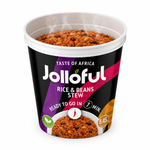
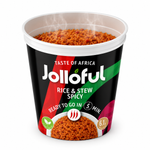
Order your 8-pack / 12 pack box today
What if saving time in the kitchen didn’t mean settling for another bland, repetitive dinner? If you’re wondering how to reduce time spent on cooking, look beyond the minutes at the stove. Deciding what to make, shopping for ingredients, chopping, and cleaning can turn one meal into a much bigger task.
That daily effort can wear down even people who love good food. You don’t have to choose between a calmer weeknight and meals with the warmth, spice, and character you enjoy. A little planning, a few useful shortcuts, and simpler cleanup can make a real difference.
This article shares practical ways to plan meals, prepare ingredients, and streamline cooking without losing variety or flavour. You’ll also find ideas for busy evenings when cooking from scratch isn’t realistic. Jolloful’s shelf-stable West African meals are ready in 5-7 minutes by adding hot water and stirring, stay shelf-stable for up to 12 months, and are a whole meal, not a snack. The goal is simple: less time managing dinner, more time enjoying it.
How to Reduce Time Spent on Cooking Starts with Finding Your Time Drains
Dinner can feel like a string of small jobs before anyone takes a bite. You decide what sounds good, check the fridge, shop for missing ingredients, prepare everything, cook, then face the dishes. The stove is only one part of the work.
To learn how to reduce time spent on cooking, first notice where your own effort goes. For a few weekdays, jot down what slows the meal down. Separate active cooking, such as chopping or stirring, from waiting for food to cook, shopping, deciding what to make, and cleaning up. You don’t need a stopwatch. A short note like “forgot an ingredient” or “used several pans” can reveal a recurring time drain.
This isn’t about rushing through a meal or stripping away the flavours that make it satisfying. The aim is to remove avoidable steps while keeping the cooking, aromas, and shared moments you enjoy.
Which parts of cooking take up the most time?
Look for repeated delays across the whole routine. Do you make an extra shop because you don’t have a plan? Does chopping take longer than cooking? Do several pans and prep bowls leave a pile to wash? These patterns matter more than guessing which task “should” be quickest. Meal preparation strategies can help you plan and prepare food ahead, rather than treating every dinner as a fresh start.
Picture a weekday evening: you open the fridge, debate between a rice dish and something else, realise an ingredient is missing, and only then start chopping. Each choice seems small, but repeating them day after day can make dinner feel like a second shift, whether you’re cooking in the UK or Germany.
Choose the right kind of shortcut
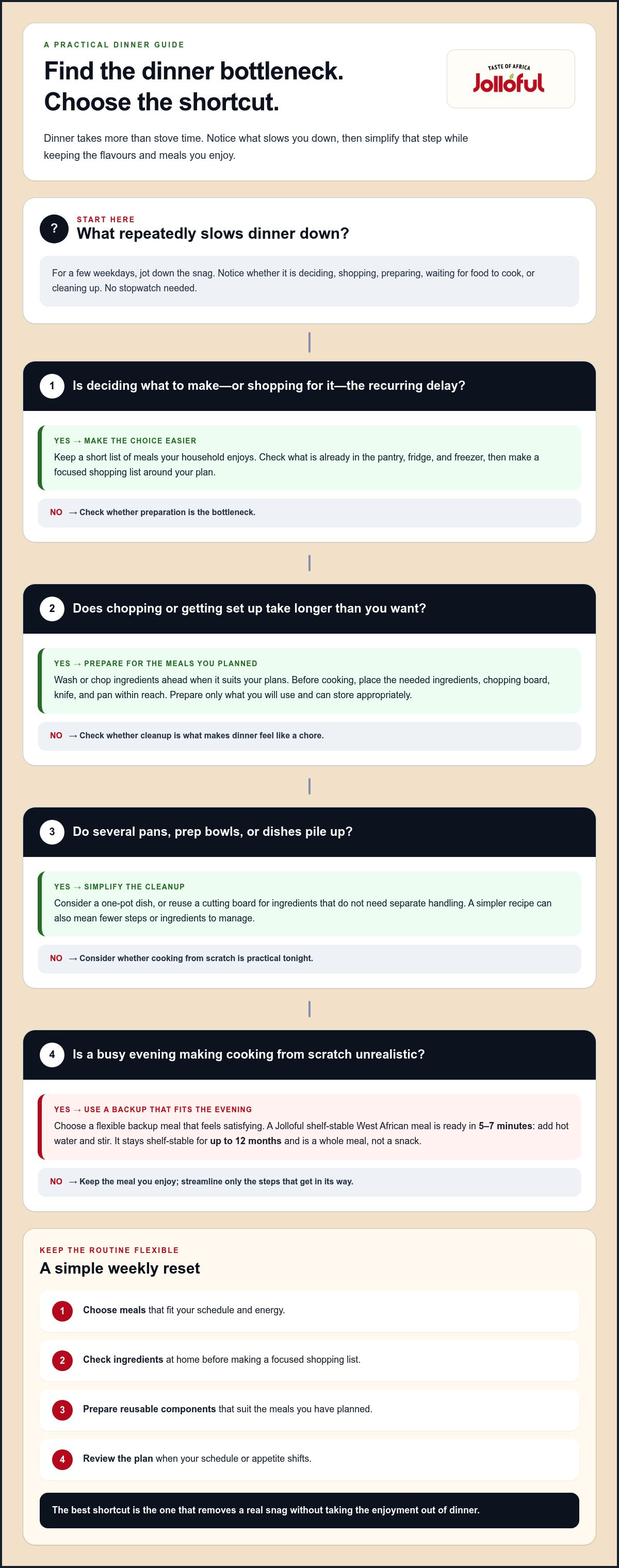
Match the shortcut to the time drain. If choosing is the problem, keep a short list of meals your household enjoys. If prep is the bottleneck, wash or chop ingredients ahead when it suits your plans. If cleanup piles up, consider a one-pot dish or reuse a cutting board for ingredients that don’t need separate handling.
Simplifying one step isn’t the same as replacing your whole meal routine. You might keep the familiar flavours of a Nigerian-style stew and rice dinner, while choosing a simpler side or preparing ingredients earlier. On a particularly full day, a shelf-stable Jolloful West African meal is another option. It’s ready in 5-7 minutes by adding hot water and stirring, stays shelf-stable for up to 12 months, and is a whole meal, not a snack.
Use your notes to choose one change that addresses a real bottleneck. If shopping is the issue, plan several dinners around ingredients you already use. If deciding what to eat is the drain, settle on a few flexible options before the week begins. Keep the dishes and tastes that bring pleasure; streamline the steps that repeatedly get in their way.
Build a Simple Meal Routine to Spend Less Time Cooking
A useful routine doesn’t need a strict menu for every night. It needs a few simple steps that make dinner easier to start, even when the day changes. Try this sequence once a week, then adjust it to suit your household:
- Choose meals that fit your schedule and energy.
- Check ingredients at home before making a focused shopping list.
- Prepare reusable components that suit the meals you’ve planned.
- Review the plan when your schedule or appetite shifts.
A repeatable meal plan reduces last-minute decisions because you already have workable options in mind when dinner time arrives. That structure can help you figure out how to reduce time spent on cooking without turning every weeknight meal into a rigid routine.
Plan meals around what your week allows
Look at the shape of your week before choosing dishes. On a busy evening, plan a meal with fewer steps; on a quieter one, leave room for a longer cook. Reuse a format, such as rice with vegetables and a sauce, while changing ingredients or seasonings for variety. Keep one flexible backup for days when plans shift or appetites change.
For example, the same basic plate can take on a different character with a fresh herb, a warming spice, or another vegetable. You’re repeating a helpful structure, not serving the same flavour every night. A backup meal should be easy to keep on hand and appealing enough to feel like a real choice, not a last resort.
Make preparation easier before cooking begins
Before shopping, check what’s in the pantry, fridge, and freezer. Build a short list around the meals you’ve chosen, rather than buying ingredients without a plan. Prepare only what you’ll use and what fits your storage habits. A quick setup helps too: place the needed ingredients, chopping board, knife, and pan within reach before turning on the hob.
Group compatible tasks when it makes sense. Rinse vegetables while water heats, or portion a sauce while a dish simmers, so waiting time has a purpose. Store prepared ingredients appropriately and avoid leaving perishable food at room temperature while you do other tasks.
Keep the routine flexible. If an evening opens up, cook as planned; if it fills up, swap in your backup rather than forcing an elaborate meal. For a convenient West African option in your meal rotation, Jolloful meals are ready in 5-7 minutes by adding hot water and stirring, stay shelf-stable for up to 12 months, and are a whole meal, not a snack. You can explore the West African meal options as one way to make a busy meal moment simpler.
Compare Cooking Shortcuts Without Sacrificing a Satisfying Meal
There’s no single shortcut that suits every evening. Batch preparation can reduce repeated chopping, while a simpler recipe can make tonight’s dinner easier to manage. Planned leftovers help when you’re happy to eat a dish again, and ready-to-prepare meals can suit days when cooking isn’t practical.
A useful cooking shortcut reduces effort while keeping the meal satisfying. Compare options by the work they remove, the planning they need, and how well they fit your routine.
| Shortcut | Effort saved | Planning needed | When it fits |
|---|---|---|---|
| Batch preparation | Repeats less chopping or cooking | Some advance preparation | You have a suitable window to prepare components |
| Simplified recipes | Fewer steps or ingredients to manage | Low to moderate | You want to cook, but keep the process straightforward |
| Planned leftovers | Turns one cooking session into more than one meal | Plan portions and how you’ll use them | You enjoy repeating or adapting a dish |
| Ready-to-eat meals | Removes most cooking and preparation steps | Keep an option available for busy days | Your schedule leaves little room to cook |
When batch cooking or planned leftovers can help
Preparing extra portions or versatile components can make later meals easier to assemble. Cook a larger amount of a dish your household already enjoys, or prepare a component that works in more than one meal. Rice, for example, might accompany a stew one day and serve as the base for a different combination later.
Choose foods you like eating again, and use storage habits that work for your home. If leftovers tend to be forgotten, plan how you’ll serve them before making extra. The best batch-cooking plan is one that fits your appetite, kitchen space, and week.
When a ready-to-eat meal fits a busy day
Sometimes the useful shortcut is to skip the cooking session altogether. Jolloful meals are shelf-stable, freeze-dried West African meals made with plant-based ingredients. They are 100% plant-based, contain no artificial colours, added preservatives, or artificial additives, and are a whole meal, not a snack.
They’re ready in 5-7 minutes by adding hot water and stirring, and stay shelf-stable for up to 12 months. That can make them a practical option when work runs late or you want a break from meal preparation while still enjoying West African flavours. To decide how to reduce time spent on cooking, choose the shortcut that fits the day rather than expecting one method to work every time.
Use Practical Kitchen Habits to Make Everyday Cooking Easier
A few thoughtful kitchen habits can make dinner feel smoother before the pan is even warm. Keep the tools you reach for most, such as a chopping board, knife, wooden spoon, and favourite seasonings, in easy-to-access places. Grouping everyday items saves you from opening several cupboards while food waits on the counter.
Reduce setup and cleanup friction
Clear enough counter space to work comfortably before you begin. Then gather the ingredients and tools the recipe actually needs. If a dish can be made in one pan without changing the result, there’s no need to reach for extra cookware. Follow the recipe’s essential steps, but question fussy preparation that doesn’t affect flavour or texture.
Cleaning as you go can also make the end of the meal feel lighter. During a natural pause, such as while a sauce simmers, rinse the knife and board or put away ingredients you’ve finished using. Keep your attention on the food, and leave anything that would interrupt a key cooking step until later.
These small habits can be especially useful for a dish with several parts. If rice is cooking while you prepare a simple sauce, use the waiting moment to tidy the space or rinse a bowl. You’ll still have a few things to wash after eating, but less of the kitchen will be waiting for you.
Keep weekday meals flexible
Use a simple template rather than a fixed menu: choose a base, add a flavourful main or sauce, then serve with a side you enjoy. Rice, beans, vegetables, and a warmly spiced stew can be combined in different ways. A familiar side or seasoning can give a repeat meal a fresh feel without asking you to learn a new recipe.
Keep the template loose. Use ingredients you already like and adapt it to what’s on hand or how much energy you have. Meal prep can help, but it doesn’t need to become a strict schedule. Some days, a home-cooked meal is the right fit; on others, a ready-to-prepare option can make the evening easier.
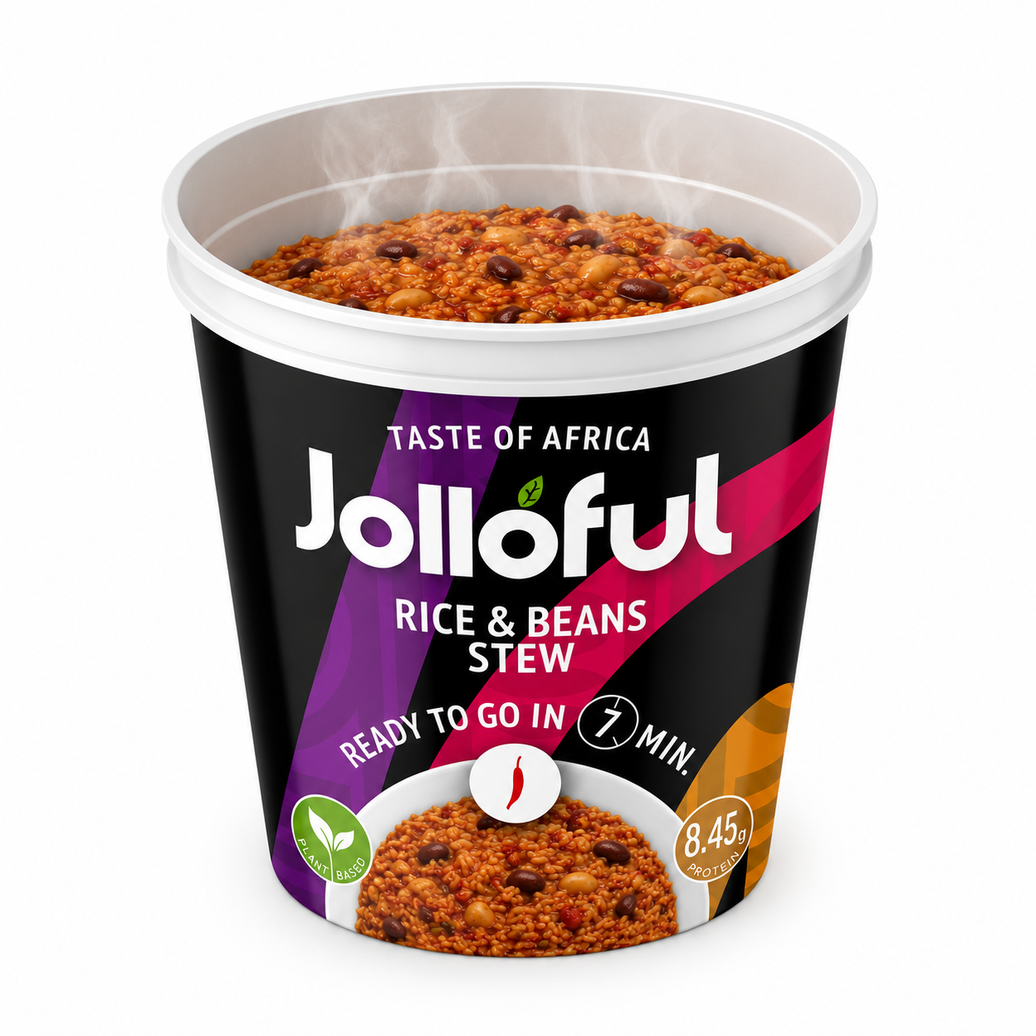
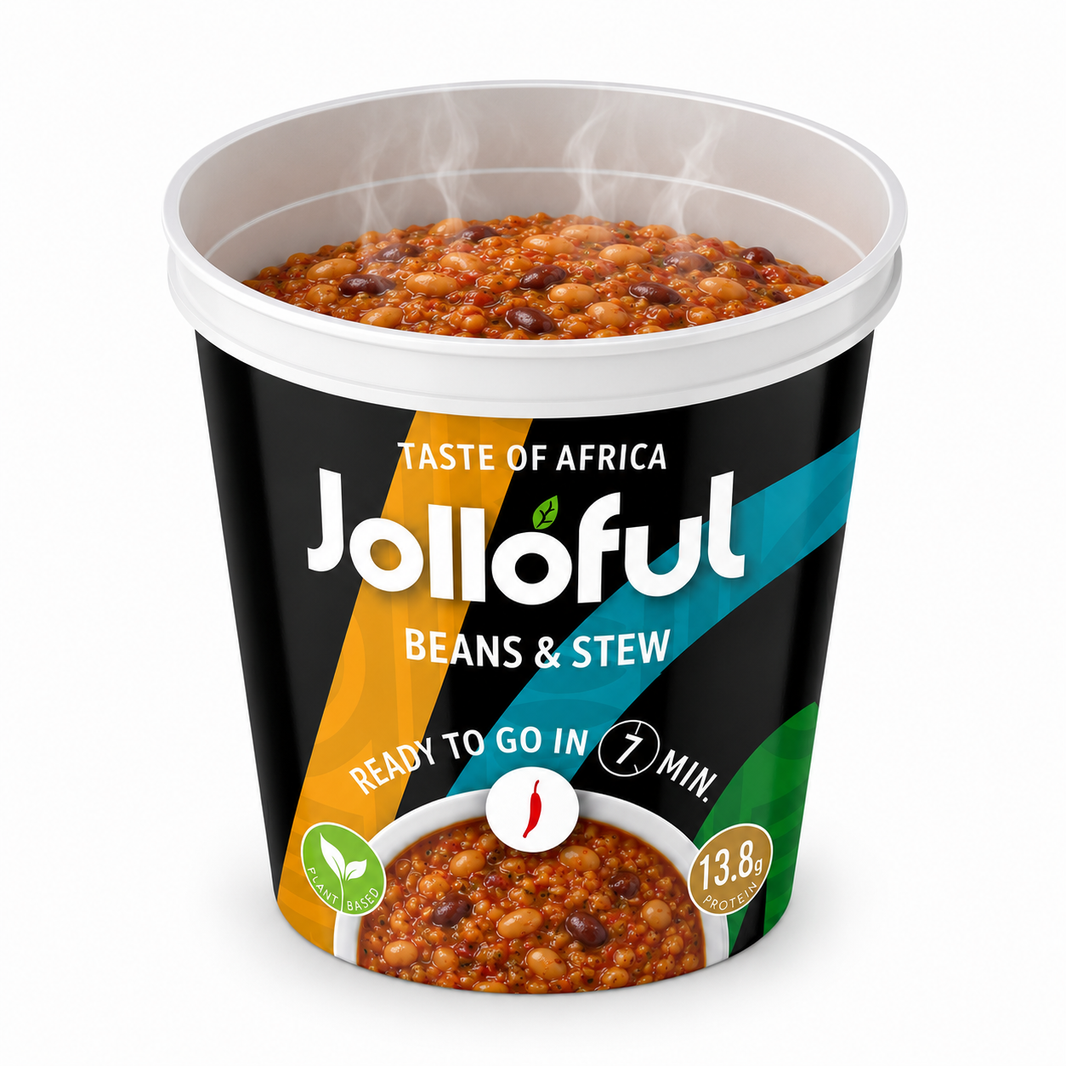
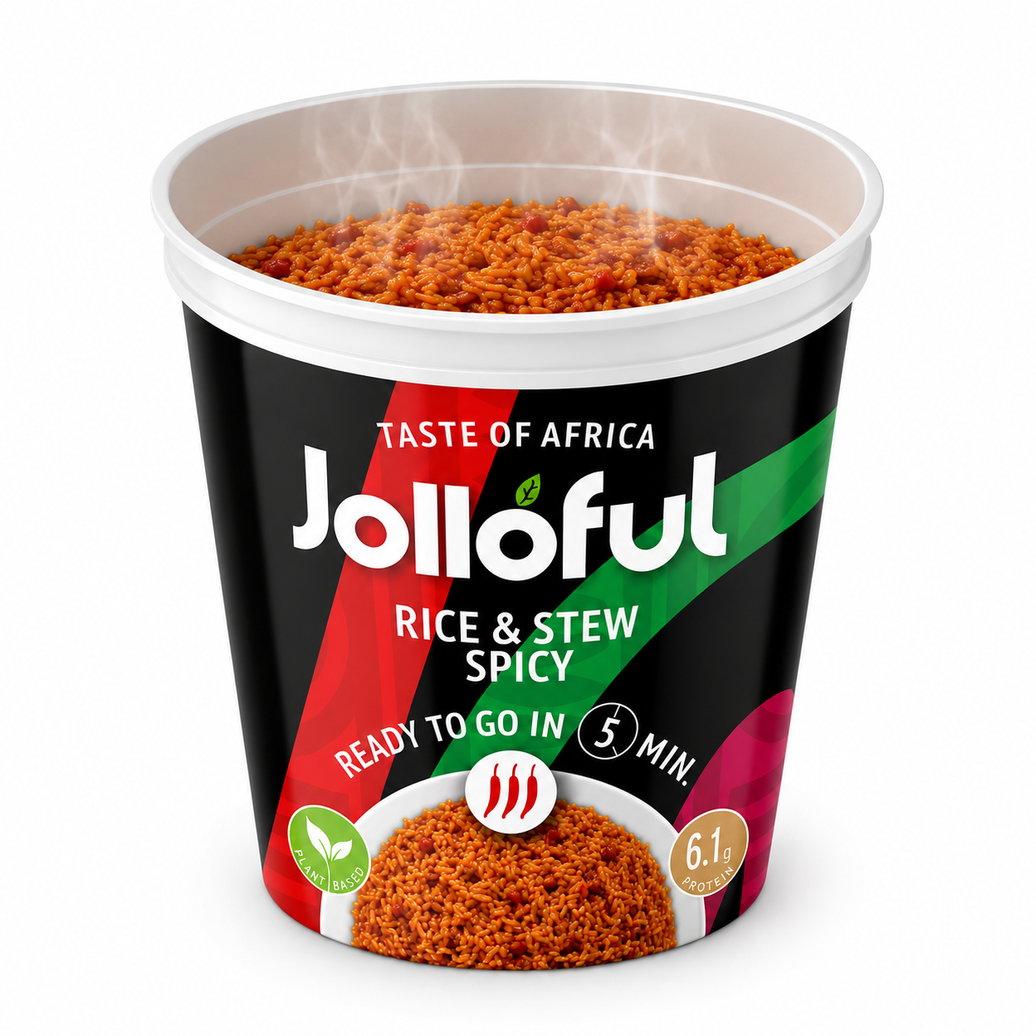
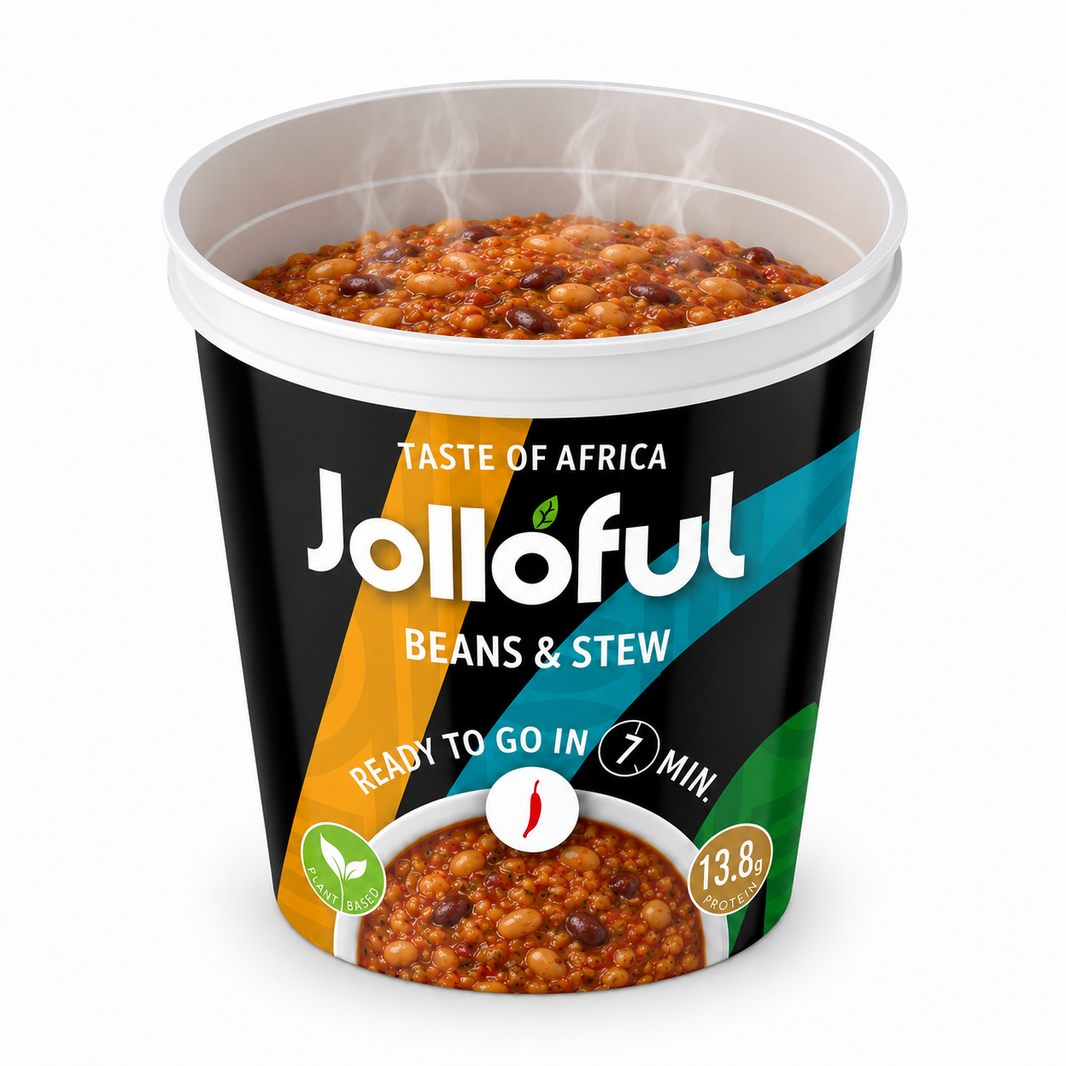
For a planned shortcut with West African flavours, the African Food Variety Pack - 8 Meals offers four meal types: White Rice & Stew Plus, White Rice & Stew Spicy, Beans & Stew, and White Rice & Beans Stew. Jolloful meals are 100% plant-based, with no artificial colours, added preservatives, or artificial additives. They’re ready in 5-7 minutes by adding hot water and stirring, stay shelf-stable for up to 12 months, and are a whole meal, not a snack.
Simple habits work best when they fit the way you cook. Choose one change, such as setting out tools before you start or rinsing a bowl during a pause, and see whether it makes your next meal feel calmer.
Make a Faster Meal Feel Like a Proper Meal with Jolloful
Some evenings call for chopping, stirring, and letting a pot of stew fill the kitchen with its aroma. Other days, even deciding what to cook can feel like one task too many. A convenient meal can make dinner manageable without making it feel like an afterthought.
Jolloful is one option for a busy day, not a replacement for every meal you love to cook. The freeze-dried West African meals are ready in 5-7 minutes by adding hot water and stirring. They stay shelf-stable for up to 12 months, so you can keep them available for evenings when plans change or time is short.
A little West African flavor, with less cooking time
Jolloful brings West African flavours into a modern routine through familiar meal forms: White Rice & Stew Plus, White Rice & Stew Spicy, Beans & Stew, and White Rice & Beans Stew. These options bring the character of West African food to the table without requiring you to prepare every part from scratch that evening.
That can be useful after a long workday or when other plans have taken over the evening. Add hot water, stir, and make space to enjoy your meal. Choosing a ready-to-prepare option now and then can be one practical answer to how to reduce time spent on cooking while still leaving room for the dishes you enjoy making yourself.
Choose a variety pack for convenient meal options
If you like having different choices on hand, Jolloful’s 8- and 12-meal variety packs each include four meal types. The African Food Variety Pack - 12 Meals includes three of each: White Rice & Stew Plus, White Rice & Stew Spicy, Beans & Stew, and White Rice & Beans Stew. It offers options for several busy meal moments, and each Jolloful meal is a whole meal, not a snack.
Variety can make a practical routine feel more personal. Choose the meal that suits your mood, then settle in with the flavours you enjoy. Jolloful meals are 100% plant-based and contain no artificial colours, added preservatives, or artificial additives.
A quick meal can still have a place at the table. Keep cooking from scratch when you have the time and appetite for it, and use a simpler option when the day calls for less effort. That balance lets convenience support your food routine rather than dictate it.
For busy-day meal planning in the UK or Germany, explore the Jolloful meal range and choose a variety pack to keep your options close at hand.
Make More Room to Enjoy Your Meals
Your kitchen routine doesn’t need a full reset. Pick one change that feels manageable this week, then notice whether it gives you more time or calm around dinner. Maybe you’ll keep a favourite meal in rotation, clear the counter before you start, or leave space for a simpler option when plans shift.
Finding how to reduce time spent on cooking is personal. The best routine is one that fits your real schedule and still leaves room for the flavours, comfort, and connection you want from a good meal. Let convenience support the way you eat, not take the pleasure out of it.
For a practical West African meal option on a busy day, explore Jolloful’s meal range and find a variety pack that fits your routine.
Small changes count. Make dinner work for you, and keep the joy on the table.
Frequently Asked Questions
How can I reduce cooking time on busy weeknights?
On a busy weeknight, reduce cooking effort by choosing one uncomplicated dish, checking the fridge and pantry before you start, and skipping steps that don’t affect the result. If your schedule allows, wash vegetables or measure a seasoning mix earlier, then store it appropriately. Keep a backup option for evenings that change. A flexible plan is more useful than a menu you feel forced to follow.
Can meal planning really reduce the time spent cooking?
Yes, simple meal planning can reduce last-minute decisions and unnecessary shopping. Pick a few meals you genuinely enjoy, then check which ingredients you already have before writing a shopping list. Leave open spaces in the plan for changing schedules, leftovers, or a different appetite. Planning should make choosing easier, not become another task to manage. If a detailed weekly menu feels like work, a short list of meal ideas is enough.
What foods are best to prepare ahead for the week?
The best make-ahead foods depend on what your household likes, your plans, and how you prefer to store food. Washed vegetables or cooked grains can be useful building blocks for different meals. For example, a grain might pair with a stew one evening and vegetables another day. Prepare only what you expect to use, and choose components that fit your usual storage habits rather than following someone else’s routine.
How do I save time cooking for one person?
Choose flexible meals that use ingredients in more than one way, and portion them to match your appetite. A vegetable, sauce, or cooked grain might work in a second dish without making dinner feel identical. You don’t need to follow a fixed weekly schedule; decide meal by meal, based on what you have and feel like eating. If cooking feels impractical on a particular day, a ready-to-prepare meal can be another option.
Do time-saving cooking habits mean giving up fresh or flavorful food?
No. Saving effort can mean simplifying preparation or planning a step ahead, not removing the flavours you enjoy. Keep the seasonings, ingredients, and meal styles that make dinner appealing to you. For instance, a familiar rice meal can feel distinct with a different sauce or seasoning. Choose shortcuts that suit the dish and your preferences. Convenience is most useful when it helps you enjoy the meal, rather than dictating what you eat.
How can I make cooking less stressful after work?
Make one or two decisions before the evening, such as choosing a simple meal and keeping an easy backup in mind. Then match the preparation to the energy you have after work. Some evenings may suit a few steps at the hob; others may call for something simpler. Not every dinner needs to be elaborate. Give yourself permission to choose a practical option while keeping your own tastes and appetite at the centre.


Hinterlasse einen Kommentar