


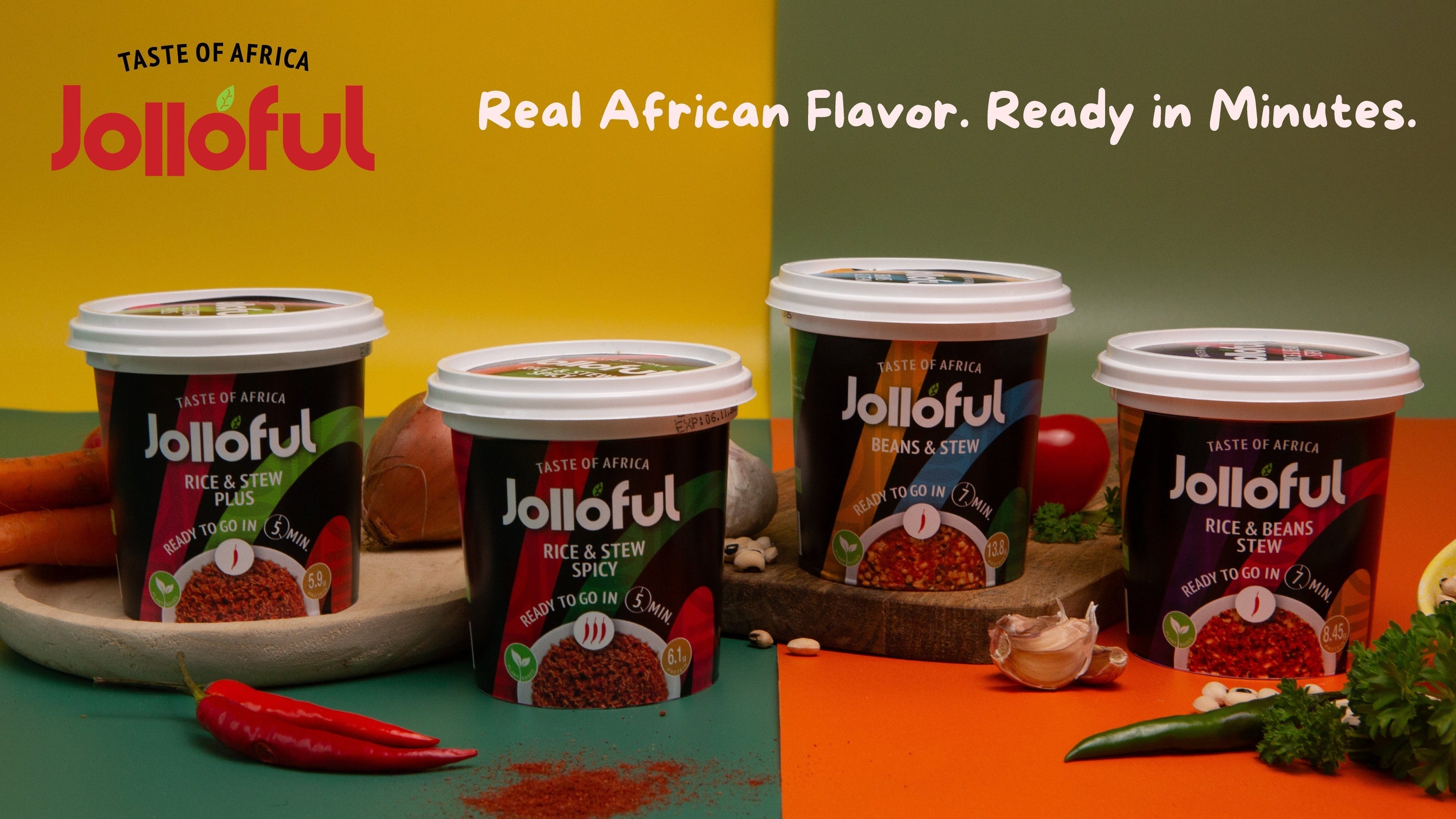
Order your 8-pack / 12 pack box today
Ready to eat African meals UK: Student Meal Prep Ideas
Meta description: Discover flexible student meal prep ideas and ready to eat African meals UK students can enjoy on busy study days.
What if your student meal plan didn’t depend on finding the energy to cook every night? Busy study weeks can make meal prep feel like another assignment, while relying on the same quick snacks gets old fast. A flexible mix of batch-cooked favourites and convenient meals offers another way to bring satisfying flavour to the week.
It’s understandable to want meals that save time without giving up variety or familiar flavours. A little planning can help you use fresh ingredients before they go to waste, prepare a few reliable dishes in batches and keep a convenient backup for late study sessions.
This guide shares practical meal prep ideas for life in the UK, from building a simple weekly plan to making leftovers work harder. You’ll also find ways to include shelf-stable African meals, such as rice and stew or beans and stew, in a busy routine. Check current product and delivery information before ordering, then make room for convenient West African flavour alongside your home cooking.
Student meal prep ideas in the UK: start with a flexible weekly plan
Lectures run late. Work shifts move around. A shared kitchen might be busy just as you get home hungry. Student meal prep works best when it fits that changing rhythm, not when it demands a full Sunday spent cooking every meal for the week.
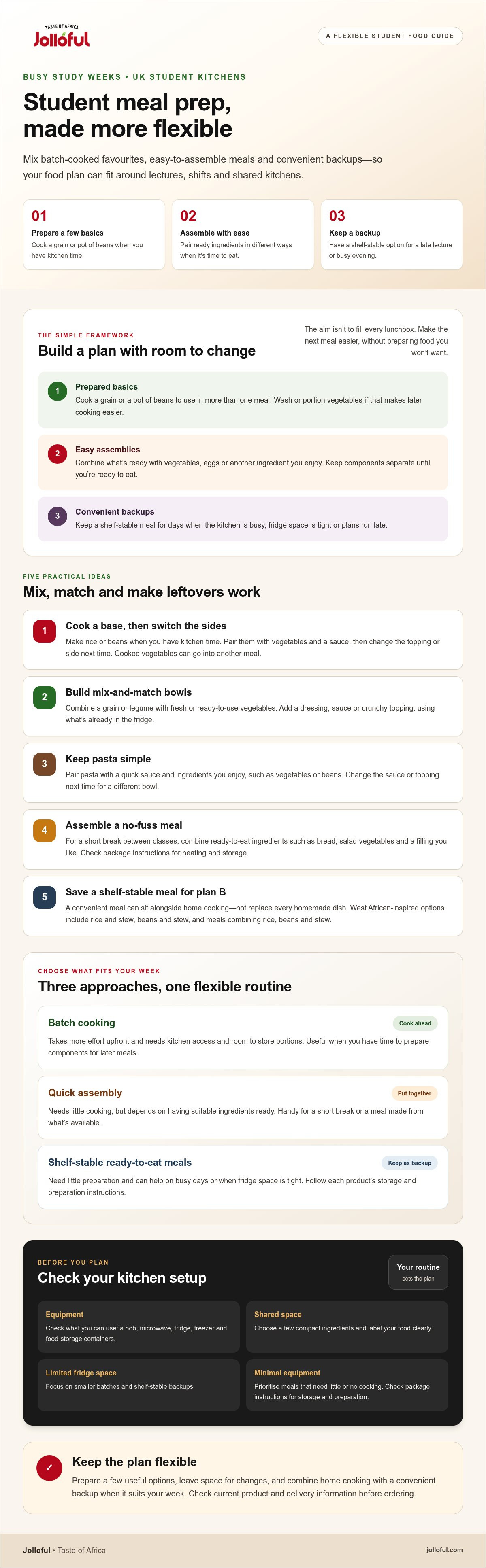
Flexible meal prep means preparing a few useful options while leaving room to change your mind. Think of it in three parts: prepared basics, easy-to-assemble meals and convenient backups. You might cook a pot of beans, wash and portion vegetables, then keep a shelf-stable meal for an evening when cooking simply isn’t happening.
That mix also leaves room for the variety of African food traditions. West African stews and rice dishes are just one part of the continent’s rich food culture, as this overview of Cuisine of Africa shows. For students looking for ready to eat African meals UK options, a ready-to-eat meal can sit alongside home cooking rather than replace it.
- Prepared basics: Cook a grain or a pot of beans to use in more than one meal.
- Easy assemblies: Pair those basics with washed vegetables, eggs or another ingredient you enjoy.
- Backups: Keep a convenient option for a late lecture, shift or study session.
How much meal prep should a student do each week?
Start small. Prepare a few meals or components, then notice what you actually use. A complete dish can help when you know you’ll want the same meal again. Washing, chopping or portioning ingredients may suit you better if you prefer to decide later what to cook.
Leave gaps in the plan for campus meals, shared cooking with friends and last-minute changes. The aim isn’t to fill every lunchbox. It’s to make the next meal easier without preparing food you won’t want to eat.
What to consider in a UK student kitchen
Before choosing recipes, check what you can use: a hob, microwave, fridge, freezer and food-storage containers. In a shared kitchen, choose a few compact ingredients and label your food clearly. If fridge space is limited, focus on smaller batches and shelf-stable backups. With minimal equipment, prioritise meals that need little or no cooking, and check packaged food instructions for storage and preparation.
Your setup and routine are personal. Build a plan around the equipment, storage space and food budget you have, then adjust it as the week unfolds.
Five student meal prep ideas for busy UK study weeks
Build a week around a few reliable ingredients, then vary how you serve them. These ideas mix batch cooking with quick assembly, so you’re not tied to one menu when lectures, shifts or study plans change. For balance and variety, use the NHS Eatwell Guide as a broad reference, and adapt meals to your needs and preferences.
- Cook a base, then switch the sides. Make rice or beans when you have kitchen time. Serve them one day with vegetables and a sauce, then pair what remains with a different topping or side. Cooked vegetables can go into another meal too. Changing the flavour and texture helps a familiar base feel less repetitive. Follow safe storage guidance for prepared food.
- Build mix-and-match bowls. Combine a grain or legume with fresh or ready-to-use vegetables, then add a dressing, sauce or crunchy topping. Keep components separate until you’re ready to eat. It’s an easy way to make a filling lunch from what’s already in the fridge, without choosing a new recipe every day.
- Keep pasta simple. Cook pasta for a meal, then pair it with a quick sauce and ingredients you enjoy, such as vegetables or beans. If you’re cooking for one, prepare only what you expect to use. On another day, change the sauce or add a different topping instead of repeating the same bowl.
- Assemble a no-fuss meal. For a short break between classes, combine ready-to-eat ingredients such as bread, salad vegetables and a filling you like. A microwave can also help you heat suitable prepared components. Check package instructions for heating and storage, especially when using prepacked food.
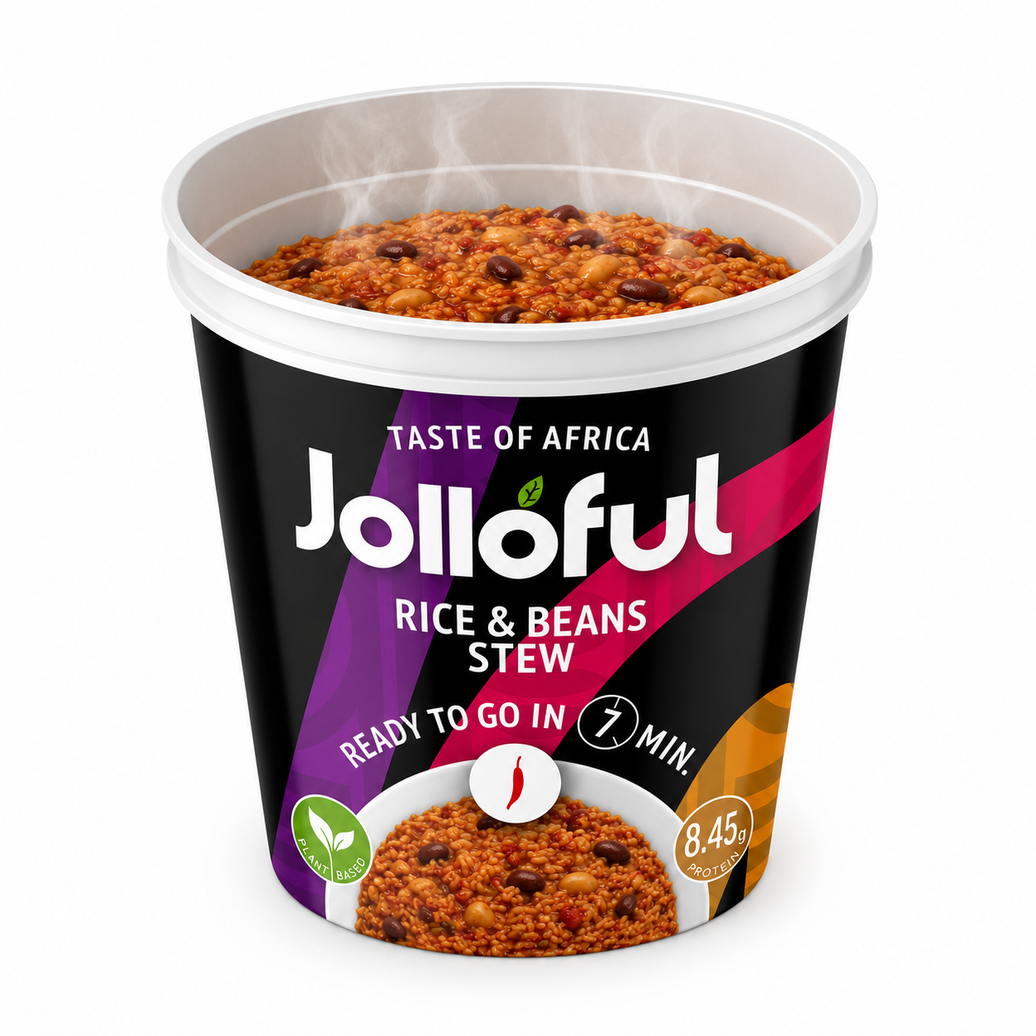
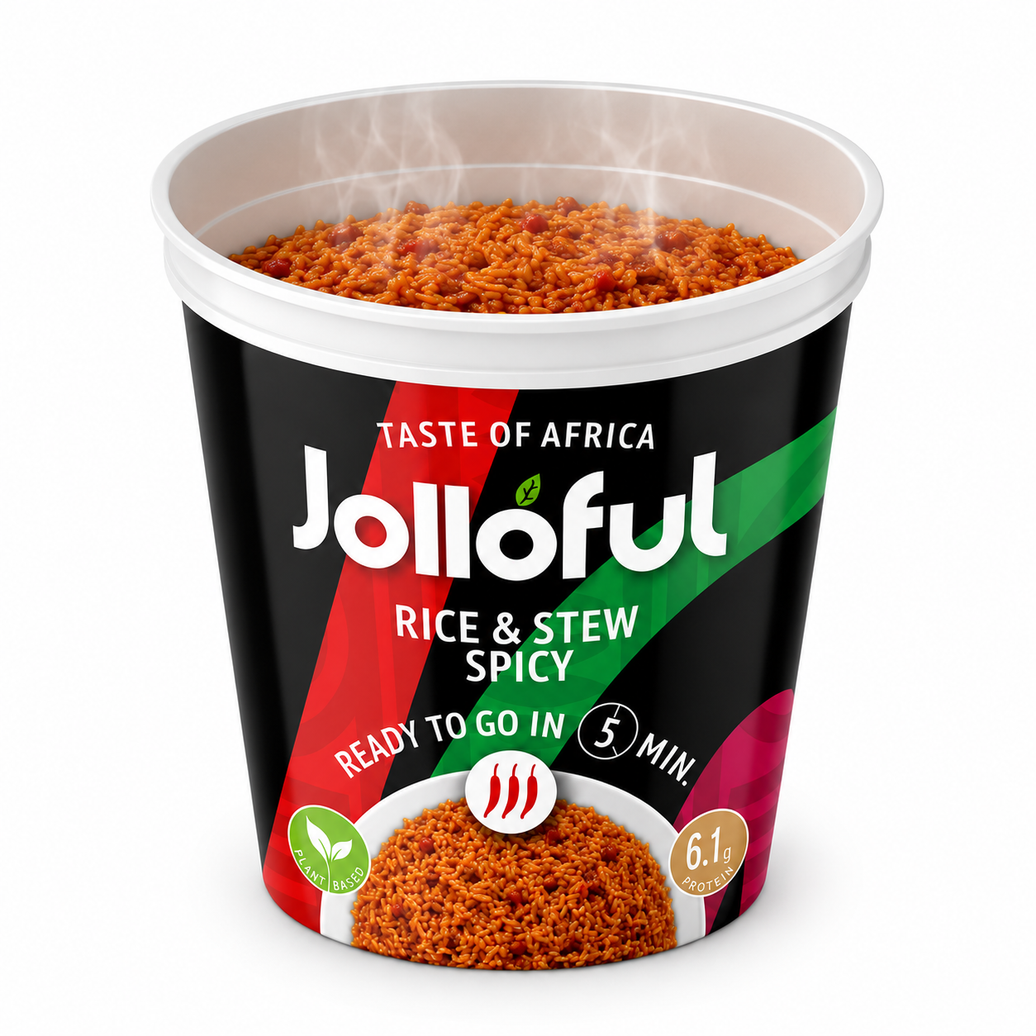
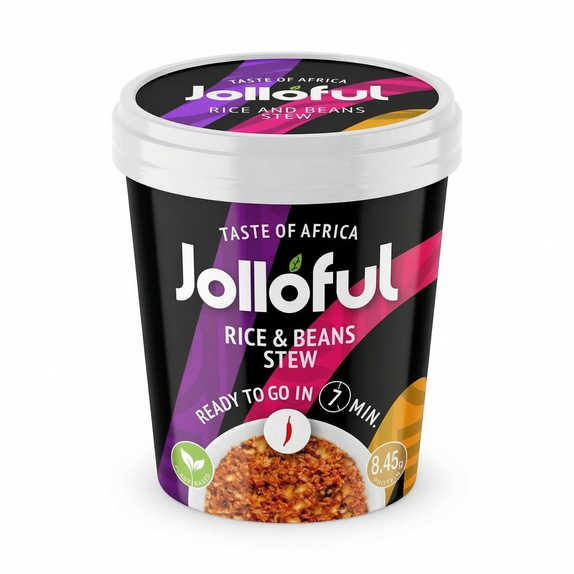
- Save a shelf-stable meal for plan B. Sometimes the kitchen is busy, or the day simply runs long. A shelf-stable meal can be a useful backup, not a replacement for every home-cooked dish. Jolloful’s West African-inspired options include rice and stew, beans and stew, and meals combining rice, beans and stew. Students exploring ready to eat African meals UK can browse the current meal range and check product and delivery details before ordering.
Keep the plan flexible and let the week determine how much cooking makes sense. You can also browse Jolloful’s current meal range when choosing a convenient backup to sit alongside your own cooking.
Batch cooking versus ready-to-eat African meals: choose what fits
There’s no single best way to manage meals during a busy study week. Kitchen access, schedule and appetite all matter. Batch cooking gives you more control over what you make, quick assembly keeps cooking light, and shelf-stable meals offer a backup when plans shift. These approaches can work together, bringing homemade food and West African-inspired flavours into the same flexible routine.
Batch cooking: Takes more effort upfront and needs kitchen access and room to store portions. It’s useful when you have time to cook and want prepared components for later meals.
Quick assembly: Needs little cooking, but depends on having suitable ingredients ready. It works well for a short break between lectures or a meal made from what’s already available.
Shelf-stable ready-to-eat meals: Need little preparation and can be useful as a backup on busy days or when fridge space is tight. Follow the product’s storage and preparation instructions.
Choose according to the day: batch cook when you have kitchen time, assemble when ingredients are ready, and keep a shelf-stable meal for when neither option fits.
When batch cooking works best
Batch cooking suits students who have access to a hob or other useful equipment and enjoy planning ahead. A pot of rice, beans or vegetables can become the base for different meals, with varied sauces or sides to change the flavour. In a shared kitchen, check when the space is free. If fridge room is limited, cook smaller amounts and store them carefully.
When ready to eat African meals UK options make sense
For days when cooking won’t fit, Jolloful offers shelf-stable, ready-to-eat options including white rice and stew, white rice with beans and stew, and beans and stew. The rice-and-stew option is available in mild and spicy versions. These West African-inspired meals can complement home cooking, not replace it. Check the Jolloful meal collection for current product details and follow the preparation and storage instructions.
Think of convenience as one part of the plan. Cook when it works, assemble when you can, and keep a practical backup for the day that gets away from you.
How to plan student meals, shopping, and food storage safely
A useful meal plan starts with your actual week, not an ambitious menu you may not have time to follow. Check your lectures, work shifts and kitchen access to decide what to cook, what to assemble and when a ready-to-eat option might help.
A simple student meal-planning checklist
- Check your schedule. Mark the days when you’ll have time and access to cook, as well as the days when a quick meal will suit you better.
- Choose meals around your setup. Match ideas to the equipment, fridge space and storage containers you can use, along with foods you enjoy.
- Plan ingredients with more than one use. If you buy vegetables for a rice bowl, for example, choose another meal that can use the rest. A shared ingredient adds variety without leaving you with an unused half-pack.
- Write the shopping list last. List what your chosen meals need, then check cupboards and the fridge before buying. This keeps the plan practical and helps avoid duplicate purchases.
- Prepare what makes sense. Cook a planned dish, portion ingredients or simply leave some items ready to assemble. There’s no need to prep every meal.
Keep the plan flexible. If a campus meal or shared dinner changes your week, adjust what you prepare rather than cooking food you may not use. Students considering ready to eat African meals UK options can include one as a convenient alternative for a busy day, alongside meals they make themselves.
Food storage and reheating: what to check
Planning tips are not a substitute for food-safety advice. Storage and reheating depend on the food and its packaging, so check the current Food Standards Agency guidance on chilling and follow its advice for handling and storing food. Don’t rely on a general meal plan to decide how long a particular item is safe to keep.
For packaged or prepared meals, follow the label’s storage and heating instructions. Check them before putting food away and again when you’re ready to eat. If you share a fridge, make space for your food and keep track of which items need using according to their packaging.
A little planning makes shopping more focused. Current guidance and clear package instructions help you handle what you’ve bought with care.
Make room for authentic African flavour in a student meal routine
A satisfying student routine doesn’t have to choose between home cooking and convenience. Batch-cooked meals, quick assemblies and a ready-to-eat option can each have a place. That flexibility makes it easier to enjoy familiar flavours, including West African-inspired rice and stew, even when a busy day leaves little room for cooking.
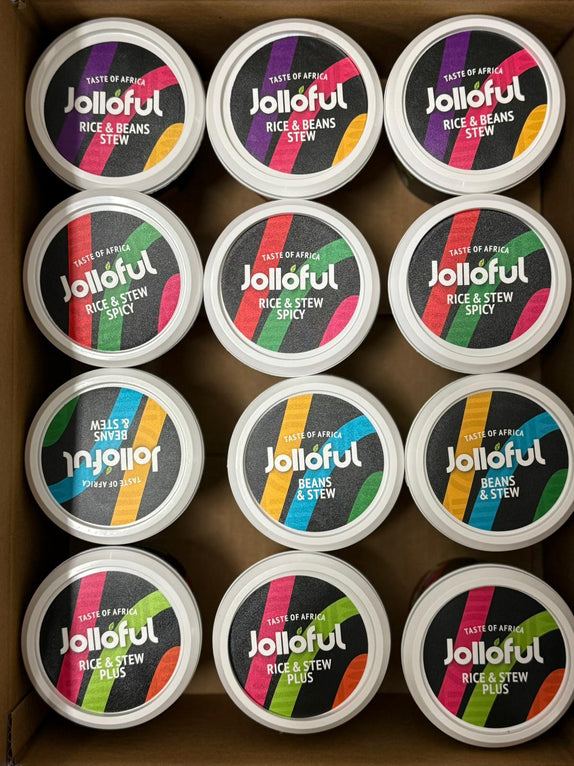
Jolloful is a Germany-based food technology company serving customers in the UK. Its range includes White Rice and stew (Mild), White Rice and Stew (Spicy), White Rice, beans and stew, Beans and stew, and meal bundles. These shelf-stable meals are a convenient option to keep alongside the dishes you cook yourself. Check current product and delivery information before ordering.
A practical way to try ready-to-eat African meals
Start by choosing the meal type and spice option that appeals to you. Jolloful offers mild and spicy rice-and-stew options, but preferences vary, so use the product details to decide what sounds right for you. The range also includes meal bundles. Check current contents and availability before buying.
For students exploring ready to eat African meals UK options, Jolloful’s shelf-stable meals offer a way to bring West African-inspired food into a changing weekly routine. Keep a meal for a day when cooking isn’t practical, and make time for your own cooking when you can. Convenience can support food traditions and personal routines, not replace them.
Keep the routine flexible after the first week
At the end of the week, notice what worked. Which meals suited your schedule? What could you make with the equipment and storage space available? Did you cook more than you wanted, or wish you had a quicker option on a particular day?
Use those answers to adjust the balance of batch-cooked dishes, assembled meals and ready-to-eat backups. A student meal routine doesn’t need to be perfect or fixed. Start with one small change, then shape the next week around what you enjoyed and what your schedule allows.
Build a student meal routine that works for you
A practical meal plan doesn’t mean cooking everything in one go. Start with a few batch-cooked basics, add quick meals you can assemble, and keep a convenient backup for days when your schedule changes. Plan shopping around ingredients you’ll use, and follow current food-safety guidance and package instructions for storage and reheating.
For students exploring ready to eat African meals UK options, Jolloful offers shelf-stable, ready-to-eat choices inspired by West African cooking, including rice and stew and beans and stew. The Germany-based company serves customers in the United Kingdom. These meals can add authentic flavour to your routine alongside the food you cook yourself. Check current product and delivery information before ordering.
Try a flexible plan, notice what fits your week, and adjust as you go. Small, thoughtful choices can make student meals feel more varied and manageable. Enjoy building a routine that leaves room for the flavours you love.
Frequently Asked Questions
What are easy meal prep ideas for students in the UK?
Start with a few meals you can prepare or assemble around your timetable. Cook rice or beans to use with different sides, make simple pasta, or put together a bowl from ready-to-use ingredients. You don’t need to prepare every meal in advance. Choose options that suit your cooking space and preferences, then leave room for campus food, shared meals or plans that change.
How can students meal prep with limited kitchen equipment?
Plan around the equipment you can reliably use. If you have a microwave but no hob, choose packaged foods with suitable microwave instructions and meals that need little assembly. If you have no fridge space, avoid planning around lots of chilled ingredients. A small set of containers can help if storage is available. Always follow food labels and current food-safety guidance.
Can ready-to-eat African meals fit into student meal prep?
Yes. Ready-to-eat African meals can complement home cooking, batch-prepared ingredients and meals from campus. Jolloful offers shelf-stable, ready-to-eat West African-inspired choices such as rice and stew and beans and stew. Keep one as a convenient option for a busy day, and check its label for storage and preparation instructions. It can add familiar flavours without requiring you to cook every meal.
How do I plan student meals without wasting food?
Choose meals before you shop. Check your timetable, kitchen access and what you already have, then list ingredients you’ll use in more than one dish. For example, plan two different meals around the same rice, beans or vegetables, changing the sides or toppings. Buy only what your plan calls for, and adjust it if campus meals or shared cooking change your week.
Are shelf-stable meals useful for students?
They can be a practical backup when the kitchen is busy, your schedule runs late or fridge space is limited. Shelf-stable meals are designed for storage without refrigeration, but always follow the product label for storage and preparation. They’re one part of a flexible routine, not a replacement for every meal you cook or assemble yourself.
Where can I find ready-to-eat African meals in the UK?
Jolloful is a Germany-based food technology company serving customers in the United Kingdom and other European markets. Its shelf-stable range includes White Rice and stew (Mild), White Rice and Stew (Spicy), White Rice, beans and stew, and Beans and stew. If you’re searching for ready to eat African meals UK, check Jolloful’s current product range and delivery information before ordering.



Hinterlasse einen Kommentar