
Walk through any major supermarket and the pattern is hard to miss. Convenience food still leans heavily beige, bland and forgettable. That is exactly why modern African food brands matter. They are not simply adding another option to the shelf. They are changing what fast, packaged food can taste like, what it can represent, and who gets centred in the story.
For years, African cuisine was either overlooked, flattened into vague labels, or treated as something you had to seek out in specialist spaces. Meanwhile, consumers got used to a poor trade-off: eat quickly or eat well. Modern African brands are pushing back on both problems at once. They are bringing real flavour, cultural depth and everyday ease into one product experience.
What sets modern African food brands apart
The best modern African food brands are not trying to make African food more acceptable by stripping away its identity. They are doing the opposite. They are taking dishes, ingredients and flavour traditions seriously, then building formats that fit modern life.
That might mean shelf-stable meal cups, pantry staples with cleaner labels, elevated sauces, spice blends, snacks or frozen meals that cut cooking time without flattening the character of the dish. The key difference is intent. These brands are not selling an abstract idea of "world food". They are selling food rooted in actual places, communities and tastes.
That matters because convenience has long been coded as generic. Fast usually meant heavily processed, nutritionally weak and culturally empty. Modern African food brands are proving that speed does not have to come at the expense of flavour, ingredient quality or pride of origin.
The shift is bigger than food
There is a business story here, but there is also a cultural one. When African food appears on shelves in modern, credible, well-designed formats, it changes perception. It tells diaspora consumers that these flavours belong in everyday routines, not just special occasions or long cooking weekends. It also tells curious first-time buyers that African food is accessible without being watered down.
For many shoppers in the UK and across Europe, that combination matters. Life is busy. People want meals they can make between meetings, after the school run or late in the evening when cooking from scratch feels unrealistic. But they are also more ingredient-aware than they were a decade ago. They read labels. They want fewer additives. They care where flavours come from. They are tired of convenience food that feels like a compromise.
That is where African food brands with a modern point of view can stand out. They are meeting practical needs while serving something larger than convenience alone.
Why authenticity and convenience no longer need to fight
One of the oldest assumptions in packaged food is that authenticity fades as convenience rises. Sometimes that is true. Some products use heritage as a marketing layer while the food itself feels muted, over-sweetened or strangely cautious.
But the stronger brands understand that authenticity is not about refusing innovation. It is about knowing what cannot be lost in the process. Flavour balance matters. Texture matters. Heat matters. The ingredients chosen matter. Even the language around the product matters.
A ready meal inspired by West African cooking does not need to mimic a slow, home-cooked pot in every detail to be credible. It does, however, need to respect the profile of the dish. If the format saves time but the flavour feels timid or vague, shoppers notice. Particularly diaspora shoppers. They know when a brand is representing a cuisine and when it is diluting it.
The smartest companies work with that reality rather than around it. They build products for real life while keeping the food recognisable, honest and satisfying.
Modern African food brands and the convenience reset
Convenience food is overdue for a reset. The old model focused on cheapness, long shelf life and low expectations. The new model is more demanding. Consumers want portability and speed, yes, but they also want quality they can feel good about.
This is where modern African food brands have a real advantage. African cuisines already carry boldness. They are not built around timid seasoning or one-note flavour. When translated well into shelf-stable or quick-prepare formats, they can offer what so many mainstream convenience products lack: depth, warmth, complexity and memorability.
There is also a practical strength in dishes that were never designed around blandness. Rice dishes, stews, grains, pulses, pepper-led sauces and layered spice profiles often hold their identity better than foods that rely on artificial enhancers to create impact. That does not make product development easy. Shelf stability, texture retention and quick preparation all require careful formulation. But when brands get it right, the result feels genuinely different.
Not novelty. Not a token "ethnic" aisle purchase. Just better convenience.
What shoppers should look for
Not every brand using African cues is doing the work properly. Packaging can look polished while the product itself underdelivers. So what separates meaningful innovation from surface-level trend chasing?
Start with clarity. A serious brand should be specific about flavour inspiration, ingredients and preparation. Vague language often signals a vague product. If everything is described as exotic, fiery or inspired, but very little is explained, that is usually not a good sign.
Then look at the ingredient list. Clean labels are not everything, but they do tell a story. A shorter list with recognisable ingredients often suggests a brand is trying to let the food speak for itself rather than relying on fillers, artificial colour or heavy-handed flavour engineering.
Finally, consider who the product is really for. Some brands are built for diaspora households first, with room for new audiences to join. Others are made mainly for curious mainstream shoppers and end up sanding off the details. Neither audience is wrong, but the strongest products tend to respect both. They feel familiar to those who know the cuisine and welcoming to those trying it for the first time.
Why representation on shelf matters
Food is never just functional. It carries memory, belonging and visibility. When African cuisines are absent from mainstream food retail, the message is subtle but clear: these flavours are outside the everyday.
Modern African food brands challenge that idea. They put African meals where people actually shop and how people actually live. That matters for a student looking for something fast that still tastes like home. It matters for a working parent who wants dinner sorted in minutes without defaulting to another dull option. It matters for non-African consumers who are ready for more than the same recycled convenience categories.
This kind of visibility also raises the standard. Once shoppers experience African food in accessible, high-quality formats, expectations shift. They begin to ask more of packaged food in general. Why should quick meals be bland? Why should convenience mean compromise? Why should some cuisines be treated as premium and others as niche?
Those are healthy questions for the wider food industry.
The real challenge for growth
There is momentum, but growth comes with pressure. As brands scale, they often face a familiar tension: stay true to the food or broaden appeal by softening the edges. Sometimes adaptation is sensible. A product made for a broad retail environment may need a different format, heat level or portion size. It depends on the use case and the customer.
But there is a line between adaptation and erasure. If scaling means flattening flavour until the food becomes interchangeable with everything else on the shelf, the brand loses its point of difference. The opportunity is not to make African food less African. It is to make authentic African flavour easier to access.
That is why the strongest players in this space tend to be confident in their identity. They do not apologise for spice, depth or specificity. They explain the product well, make the format easy, and trust consumers to meet the food where it is.
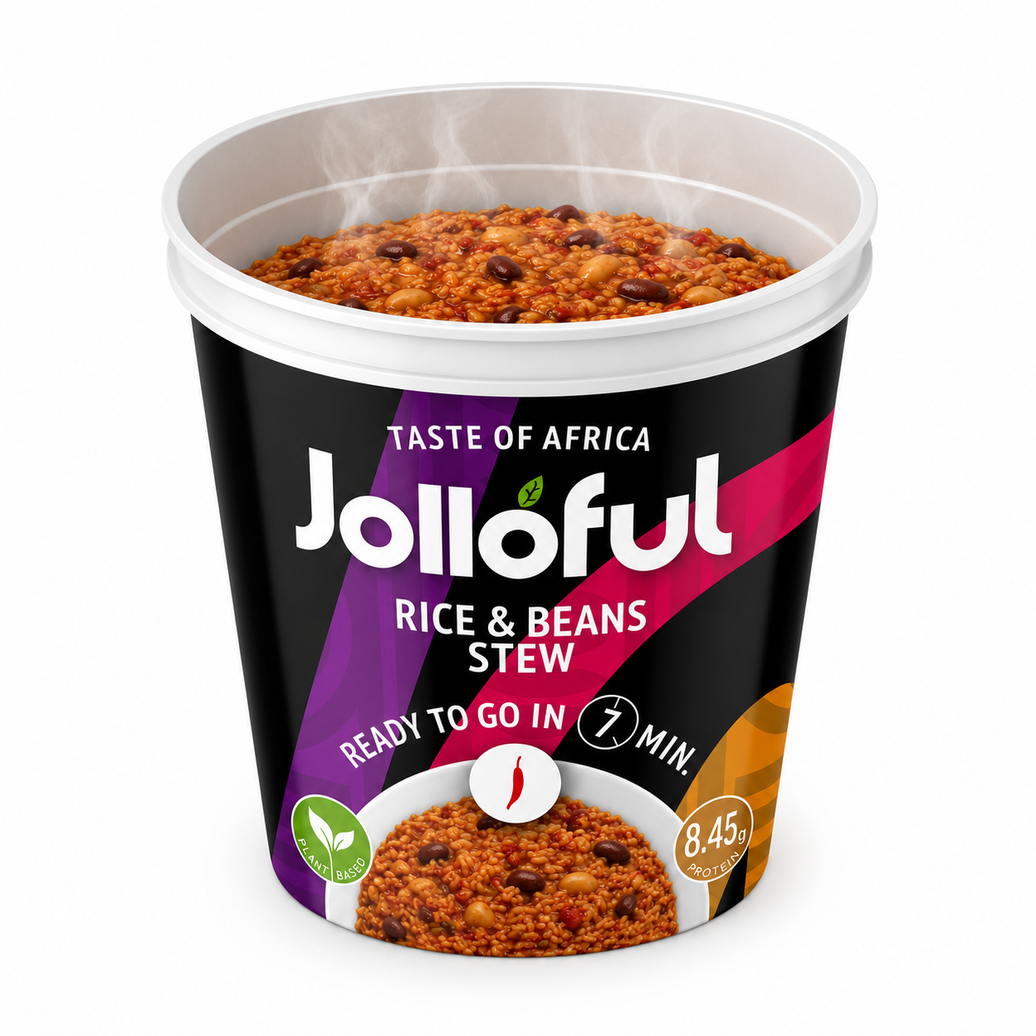
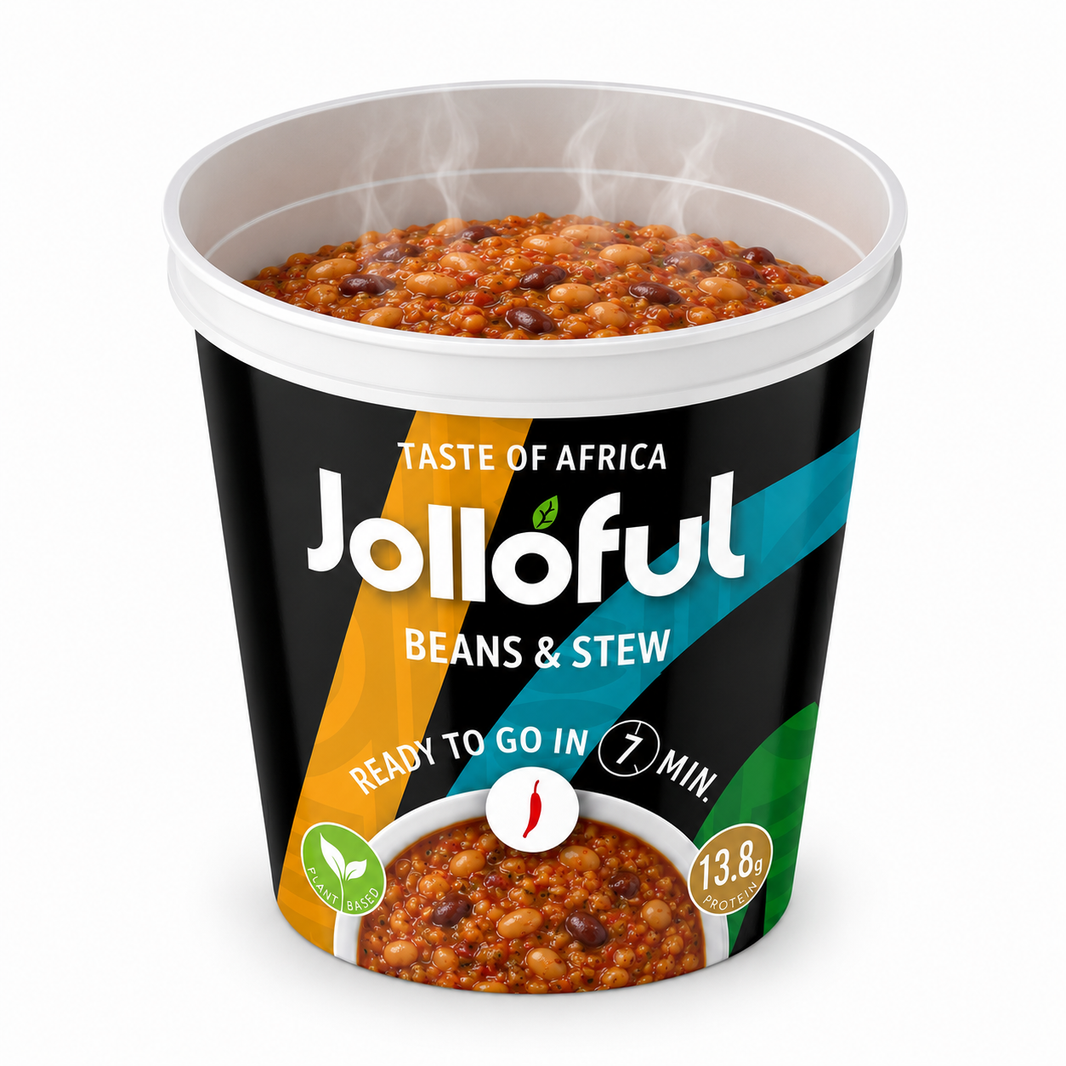
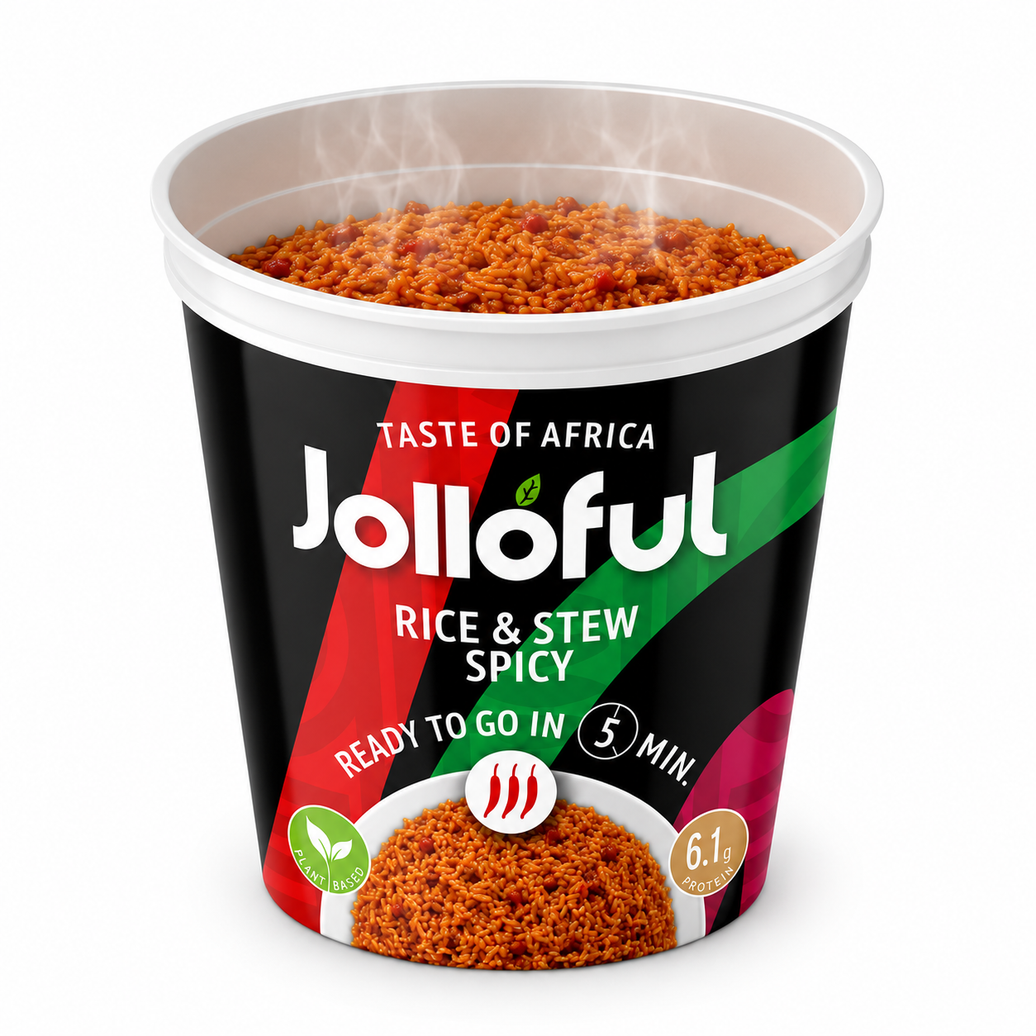
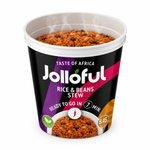
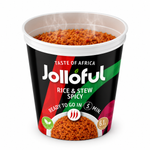
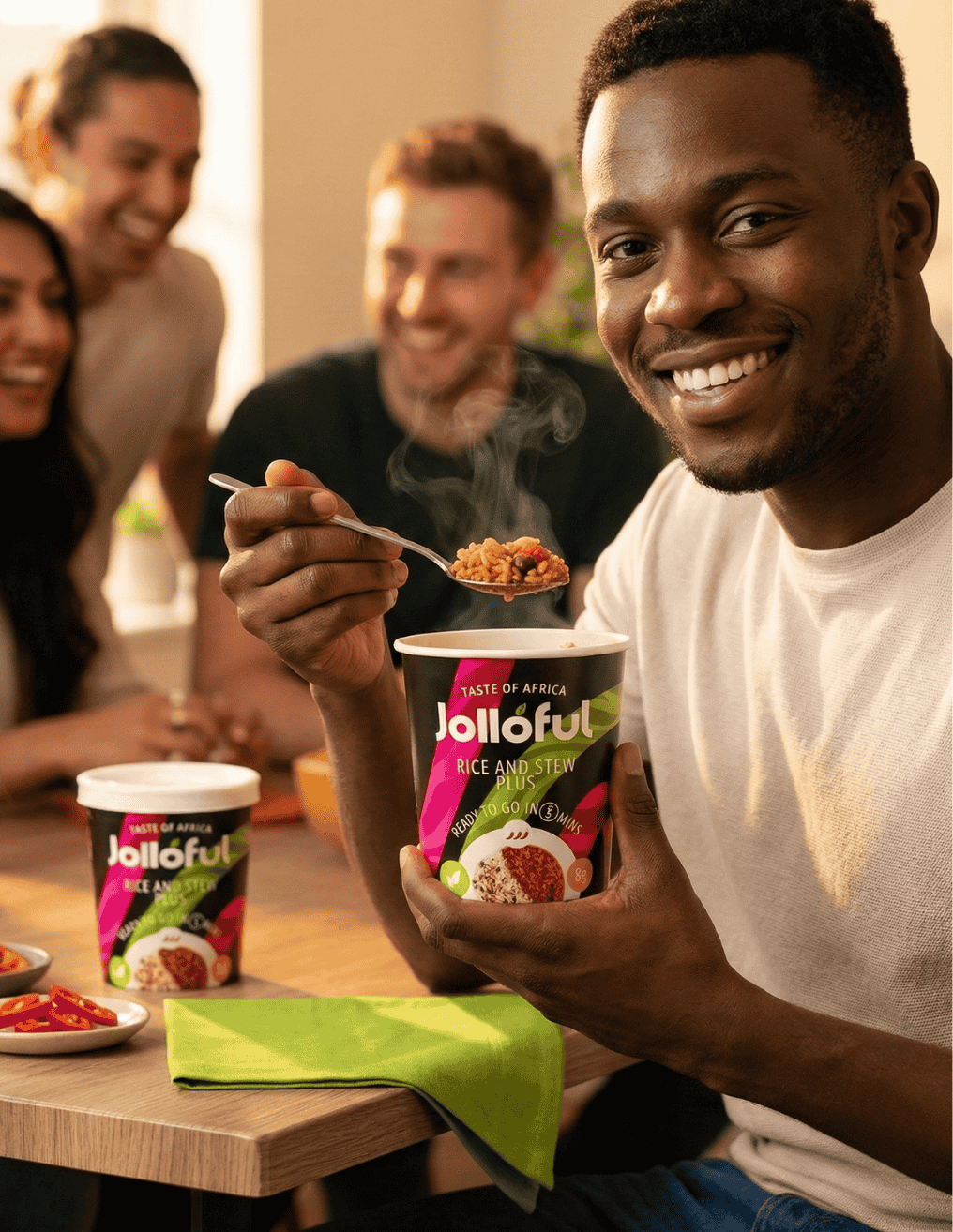
One brand doing this well is Jolloful, which positions African meals as quick, shelf-stable and rooted in real flavour rather than the tired instant-food model. That distinction matters. It shows where the category can go when convenience is treated as a format, not a flavour profile.
Where this category is heading
Expect the category to keep growing, but not in one neat direction. Some brands will focus on pantry staples and cooking sauces for people who want to build meals at home. Others will push further into ready-to-eat and add-hot-water formats for speed-first shoppers. Some will lean regional and specific. Others will champion a broader Pan-African identity.
That variety is a strength, not a weakness. African cuisine is not one thing, and the market should not pretend otherwise. The real win is not a single breakout product. It is a future where African food brands are recognised as part of modern food culture, not a side note to it.
For shoppers, the opportunity is simple: expect more from convenience. Expect flavour with backbone. Expect products that respect where they come from. And when you find brands doing that well, make room for them in your regular rotation, not just your curiosity basket.


Hinterlasse einen Kommentar