

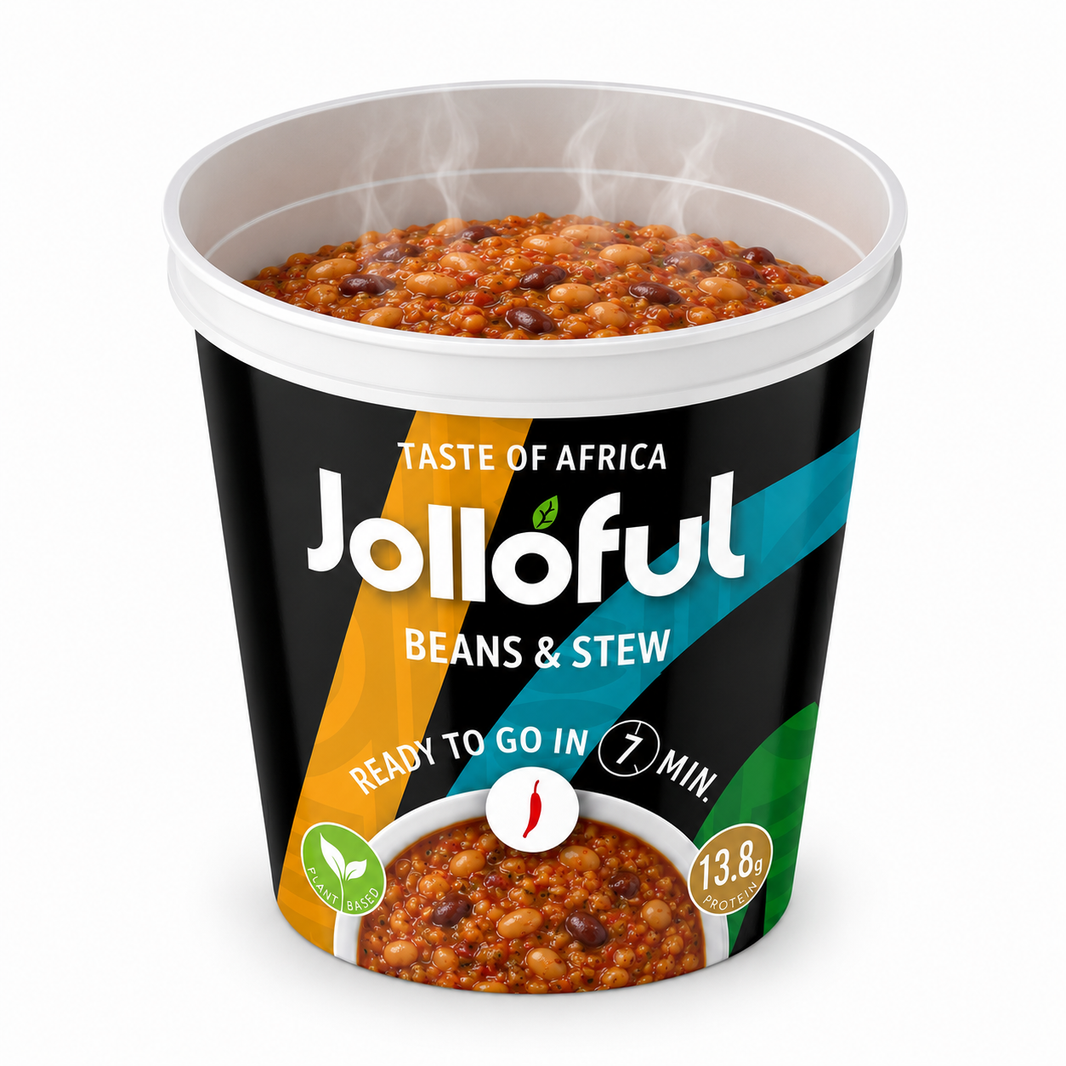
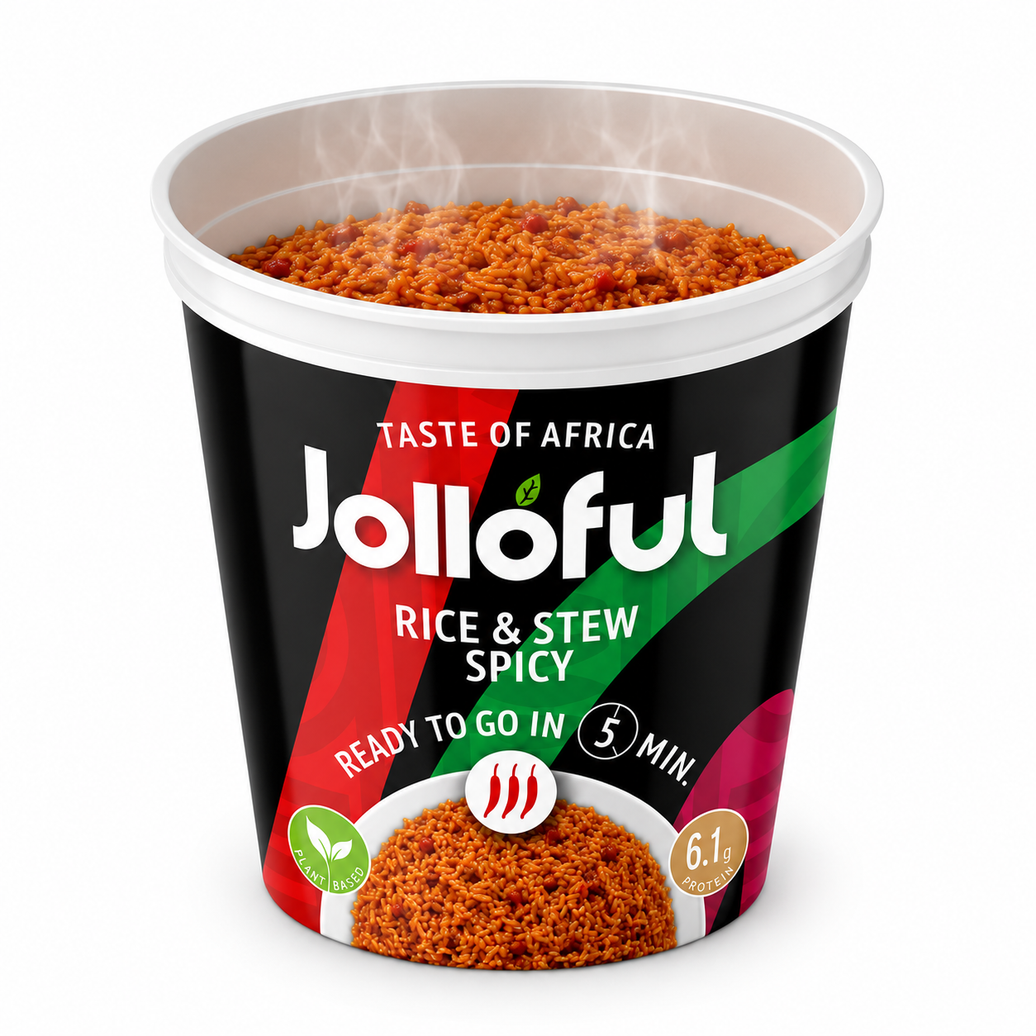
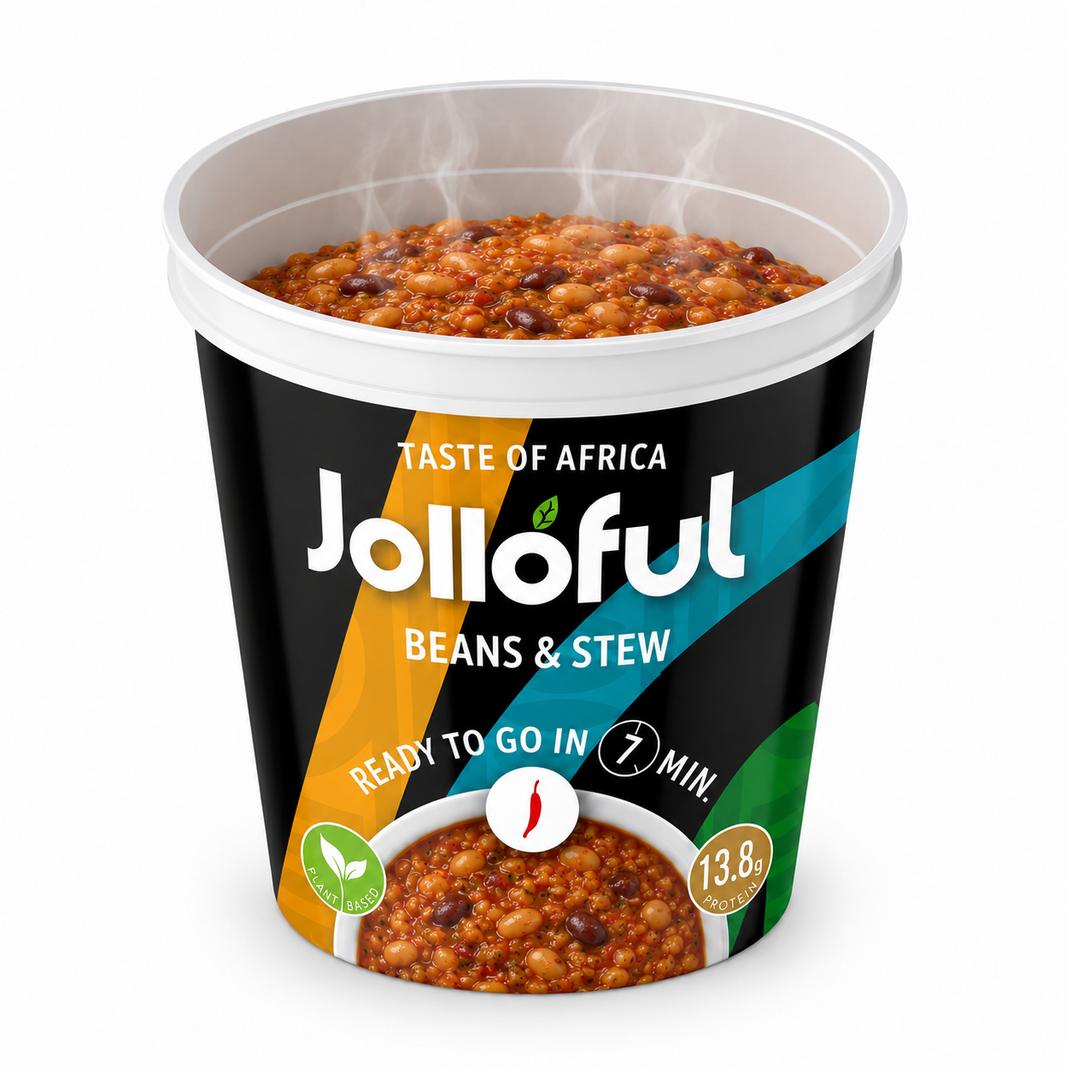


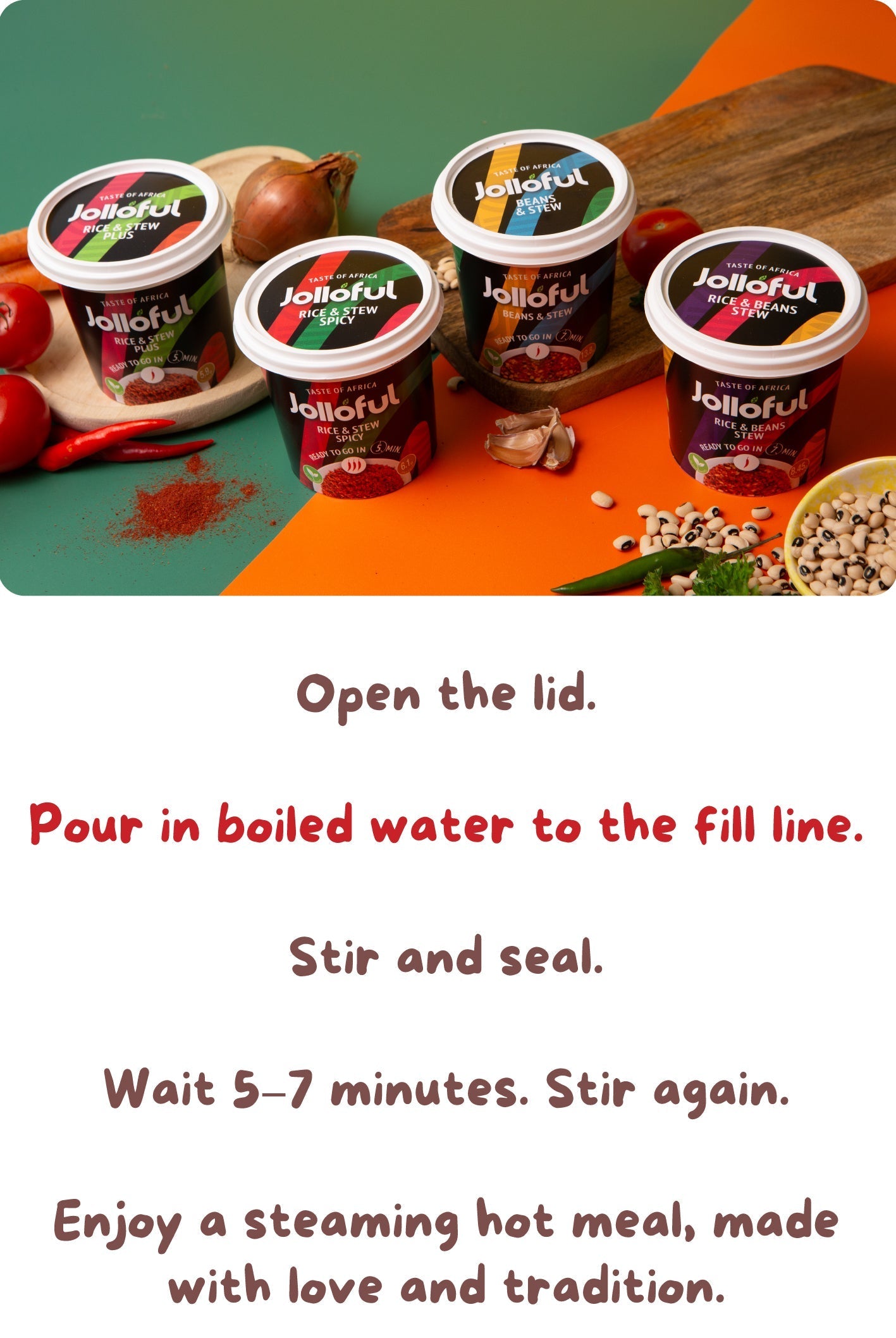
Order your 8-pack / 12 pack box today
African food innovation is not about making African cuisine palatable to everyone else. It is about giving real, recognisable food the format modern life demands: faster, easier to store, simpler to prepare and still full of character. For too long, convenience has meant bland flavours, vague ingredients and meals that fill a gap without saying much. African food deserves better.
A five-minute meal can carry depth. A shelf-stable pack can be made with ingredients you recognise. And a busy Tuesday evening can still taste like something worth sitting down for.
What African food innovation should protect
The strongest food ideas begin with respect for the original dish. African cuisines are not one flavour profile, one pantry or one way of cooking. They hold countless regional traditions shaped by local crops, migration, trade, family methods and bold use of spice. Innovation that flattens all of that into a single, generic “African” flavour has missed the point.
Good innovation protects the things that make a meal meaningful: the warmth of pepper, the savoury base, the familiar aroma, the texture and the balance that tells someone, before the first bite, that this food has a point of view. It does not replace those qualities with artificial flavouring simply because it is cheaper or easier to produce at scale.
That matters especially for diaspora households. Food can be a small but powerful connection to home, family and celebration. A quick meal may not replace a long Sunday cook-up, nor should it try to. It can serve a different purpose: something dependable for the office, student halls, a late train home or the evening when cooking from scratch is not realistic.
For people trying African cuisine for the first time, the same standard matters. Their introduction should not be a watered-down imitation. It should be accessible, yes, but rooted in the real flavour logic of the food.
Convenience is finally being held to a higher standard
The old convenience-food bargain was simple: accept less flavour and lower-quality ingredients in exchange for speed. Consumers are less willing to make that trade now. They read labels. They notice unnecessary additives. They want food that works around a packed day without feeling like an afterthought.
That creates a genuine opportunity for African food innovation. Many African food traditions already understand how to build big flavour from practical cupboard ingredients: grains, pulses, vegetables, herbs, spices and carefully developed savoury bases. The task is not to invent excitement where none exists. It is to preserve that excitement in formats that travel well, store safely and prepare consistently.
Shelf stability is one of the most useful parts of this shift. It means a satisfying meal can wait in a desk drawer, kitchen cupboard or travel bag without demanding a supermarket trip or a complicated plan. For young professionals and working parents, that is not a minor convenience. It is the difference between eating properly and settling for whatever is nearest.
Still, shelf-stable should never become shorthand for overprocessed. There is a clear difference between food engineered to last and food designed with care to retain its ingredient integrity. Clean labels, no added preservatives and no artificial colour are not just packaging claims. They are proof that convenience does not need to abandon standards.
The real work happens behind the packet
Making culturally rooted food quick is harder than it looks. A recipe that tastes brilliant straight from the pot may behave very differently after drying, packing and rehydrating. Grains need to retain the right bite. Vegetables need to bring flavour rather than disappear. Spice must arrive with confidence, not harshness. The finished meal must work in five to seven minutes, every time.
That is where product development earns its place. It is less about chasing novelty and more about solving practical problems without losing the soul of the dish. How can the aroma survive? How much heat feels true to the recipe while remaining welcoming to a new customer? Which ingredients keep their texture? What preparation method makes sense in a workplace kitchen as well as at home?
There will always be trade-offs. A meal made in minutes will not replicate every detail of one prepared slowly over several hours. Nor is that the only benchmark. The better question is whether it delivers a complete, satisfying experience on its own terms. If it tastes vivid, feels nourishing and honours the dish that inspired it, speed becomes an advantage rather than an apology.
African food innovation needs better representation
Representation is not achieved by adding a few African-inspired options to a range and calling the job done. It requires specificity, care and people who understand the food making decisions about how it is presented. Names matter. Ingredients matter. The stories implied by the pack matter too.
There is a particular risk when global food trends turn a continent into a moodboard. Bright patterns, broad claims and vague references can attract attention, but they do not build trust. Shoppers deserve to know what they are eating, where the flavour direction comes from and why it tastes the way it does.
This is also why bold seasoning should not be treated as a warning label. Heat, fragrance and layered savouriness are central pleasures, not obstacles to work around. The goal is not to make everything mild enough for an imagined mainstream customer. The goal is to offer clear choices and let people meet flavour with curiosity.
In the UK and Germany, where grocery aisles are becoming more international but still uneven in their representation, format can help close that gap. A pantry-friendly meal with straightforward preparation lowers the barrier for someone who wants to try something new. At the same time, a familiar flavour profile gives diaspora customers an option that feels considered rather than tokenistic.
A bigger category than a passing trend
African cuisine is often discussed as though it has only just arrived. That framing ignores its long-established presence in homes, communities, restaurants and markets across Europe. What is changing is visibility. More consumers are actively looking beyond the same narrow set of convenience meals, and more makers are building products that meet them there without diluting the culture behind the food.
The next phase will not be defined by who uses the loudest packaging or makes the broadest claim. It will belong to brands that get the basics right: proper flavour, credible recipes, transparent ingredients and formats that genuinely fit daily routines.
It should also make room for range. Not every African meal needs to be hot. Not every product needs to be positioned as a challenge for adventurous eaters. Some foods are comforting, some are celebratory, some are light, and some bring serious fire. A mature category gives people choices without forcing every dish into one stereotype.
Real food, ready when you are
The best kind of progress does not ask people to choose between heritage and convenience. It recognises that both belong in the same kitchen. You can want the flavours you grew up with and still need lunch in seven minutes. You can be curious about African food and want an easy first step. You can care about ingredients without spending every evening cooking.
That is the promise behind brands such as Jolloful: food that is portable and practical, but never empty of identity. Not a shortcut away from culture. A smart route towards it.
African food innovation has room to grow because people are hungry for more than speed. They want flavour with substance, food with a story and everyday options that feel made for real life. The cupboard is a good place to start.


Hinterlasse einen Kommentar